



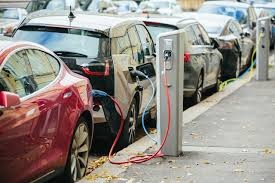
Ghana is witnessing a surge in electric vehicle (EV) adoption driven by private sector economics, with citizens embracing the technology ahead of formal government incentives, the Energy Commission has revealed.
Joyce Caitlyn Ocansey, Program Coordinator for the Drive Electric Initiative at the Energy Commission, disclosed that a national baseline study uncovered a surprisingly high number of EVs already in use across the country. She noted that this uptake is not primarily motivated by environmental concerns but by clear economic advantages.
“Currently, the government does not provide specific incentives for individuals importing electric vehicles,” Mrs. Ocansey explained. “However, during our baseline study, we observed a surprisingly high number of EVs already in use in the country.”
She elaborated that individuals are conducting their own cost analyses, comparing the expenses of charging an EV against the cost of fuel for internal combustion engine (ICE) vehicles over a week, as well as evaluating long-term maintenance costs. “Based on these calculations, they find EVs more cost-effective and are choosing them accordingly,” she stated.
This trend is particularly pronounced among commercial transport operators, especially drivers on ride-hailing platforms such as Bolt and Uber.
“For users of ride-hailing platforms, the economic advantage is even more evident,” Mrs. Ocansey said. “Charging an EV is significantly cheaper than fueling a conventional vehicle, making EVs a more viable option for commercial drivers. This shift is not driven by government incentives, but by personal economic decisions. In essence, Ghanaians are already ahead of government policy in this area. They are adopting EVs because it makes economic sense.”
Regulatory Framework Underway
On the regulatory front, Mrs. Ocansey provided an update on the draft Legislative Instrument (L.I.) for EV Charging and Battery Swap Systems, confirming that the approval process is ongoing.
She noted that while a definite timeline for its passage remains uncertain, the necessary government institutions are diligently reviewing the draft to ensure it meets all required standards.
“Regarding the regulatory framework, the process is still ongoing. The draft Legislative Instrument is going through the necessary approval stages, with various government institutions reviewing it to ensure it meets all required standards and will effectively serve its purpose,” she said. “As such, it is difficult to provide a definitive timeline for its passage. However, all relevant institutions are actively working to ensure that the L.I. is thoroughly reviewed and properly enacted. We are hopeful that the process will be completed soon.”
Mrs. Ocansey made these remarks during a stakeholder awareness and sensitization workshop on the Draft EV Charging and Battery Swap System Regulations, which convened industry players, policymakers, and private sector actors to discuss Ghana’s transition to electric mobility.
She concluded that with continued public engagement, regulatory support, and sustained private sector adoption, Ghana is well-positioned to harness the economic, environmental, and technological benefits of electric mobility.

