



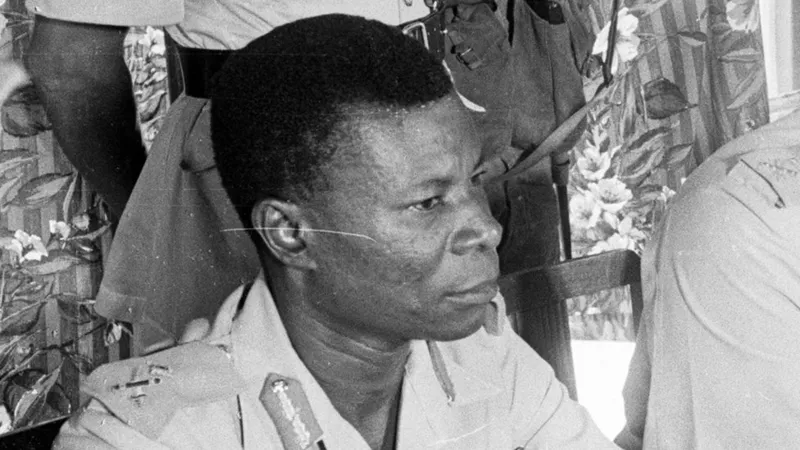
Ghana’s government has officially restored the original name of the country’s primary international airport, dropping the moniker of a military officer who led the 1966 coup that overthrew the nation’s founding father, Kwame Nkrumah.
The facility, known for decades as Kotoka International Airport, will now revert to Accra International Airport. The announcement, made exactly 60 years after the coup that brought Lt. Gen. Emmanuel Kwasi Kotoka to prominence, has ignited a fierce debate about history, memory, and national identity.
The transport ministry stated that the government “considered it appropriate” to revert to the name that reflects the capital city, projecting what it called a “neutral national image.” Officials have assured the public that the change will be “smooth and seamless” and will not disrupt airport operations or international travel.
However, the decision has proven deeply controversial, reopening old wounds from a turbulent period in Ghana’s history.
Kotoka was a key figure in the 1966 coup, which occurred while Nkrumah—a revered pan-Africanist and independence hero—was on a diplomatic trip to Asia. While supporters of the coup at the time framed Nkrumah as increasingly authoritarian, his ousting was a seismic shock to the continent and the broader liberation movement.
Kotoka’s own fate was sealed just a year later, when he was killed at the same airport during a failed counter-coup. In 1969, a subsequent military government renamed the airport in his honor, casting him as a liberator.
For critics of the name change, the airport was one of the few national symbols honoring the Volta Region, Kotoka’s home. Parliament’s minority leader, Alexander Afenyo-Markin, called the move a “betrayal” of the region, arguing it erases a legacy of service.
Kotoka’s family has also voiced opposition, stating the decision diminishes his historical contribution.
Conversely, civil society groups and many Ghanaians have applauded the move. They argue that maintaining the name of a coup leader on a major national landmark is an affront to Ghana’s democratic values and glorifies an unconstitutional seizure of power.
This view has gained significant traction under President John Mahama, who returned to the presidency after the December 2024 election. The debate over Kotoka’s legacy has intensified in recent weeks, spilling onto social media where Ghanaians remain divided over the legal, social, and political implications.
Some have questioned the government’s priorities, suggesting that the focus should remain on pressing issues like unemployment and the cost of living rather than symbolic renaming.
The 1966 coup was a pivotal moment that plunged Ghana into decades of political instability. The country endured a series of coups and counter-coups until the establishment of multi-party democracy in 1992. Since then, Ghana has been hailed as a beacon of stability in West Africa, with a series of closely fought but peaceful transfers of power. The renaming of the airport serves as a potent reminder of the complex history from which that stability emerged.

