



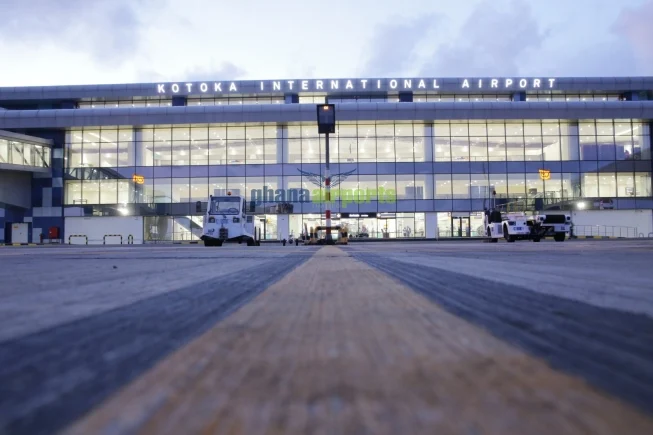
The Ghanaian government has officially reverted the name of the country’s primary aviation hub from Kotoka International Airport to its original designation, Accra International Airport.
An announcement made by the Ministry of Transport on Monday, February 23, 2026, confirmed that the facility will now be known by the name it bore at its inception. According to a press release from the Ministry’s Public Relations Unit, the decision restores the airport to its “former and internationally recognised name.”
Authorities have moved to assure the public and the international community that the rebranding will have no impact on flight operations, safety protocols, or existing travel arrangements. The Ministry highlighted that the International Civil Aviation Organization (ICAO) code for the airport remains “ACC,” ensuring continuity within global aviation systems and preventing logistical confusion.
The airport, originally established as Accra International Airport, was renamed in the late 1960s following the 1966 coup d’état, which saw the overthrow of Ghana’s first President, Dr. Kwame Nkrumah. The facility was named in honour of Lt. Gen. Emmanuel Kwasi Kotoka, a leading figure in the coup.
The renaming has sparked varied reactions across the political and social spectrum. Some have welcomed the move as an act of historical restoration, with the Convention People’s Party (CPP) expressing support for the decision. Others view it as a symbolic shift in national memory. Mahama Ayariga, a government official, clarified that the renaming is also intended to recognize the original landowners who ceded their land for the construction of the airport.
The Ministry of Transport has outlined a comprehensive plan for the transition, which includes the systematic updating of official documentation, statutory instruments, airport signage, digital platforms, and aviation publications.
The government has called on the general public, stakeholders, and international partners to cooperate with the relevant authorities to ensure a “smooth and seamless transition.”

