



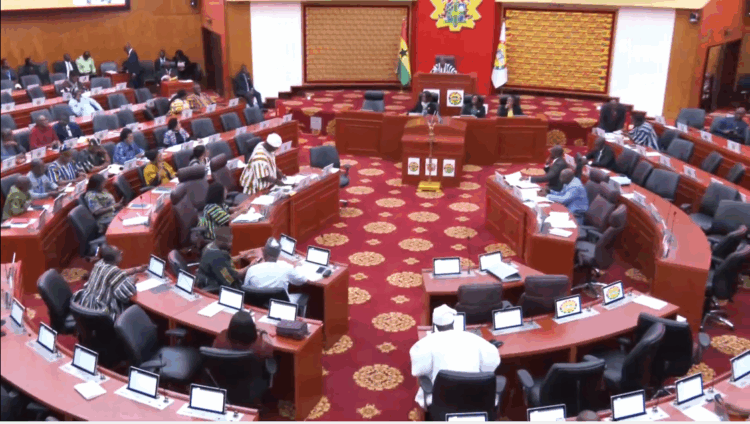
Parliament has begun a pivotal legislative process that could redefine the boundaries of national identity and public service in Ghana, as lawmakers consider a constitutional amendment to allow dual citizens to occupy the country’s highest state security and administrative positions.
The Constitution of the Republic of Ghana (Amendment) Bill, 2025, has officially been referred to the Constitutional and Legal Affairs Committee following its successful first reading, marking a defining moment in the nation’s post-colonial evolution. The proposed legislation seeks to dismantle long-standing barriers that currently prevent dual nationals from serving in critical capacities, signalling a transition from traditionalist exclusion toward a more pragmatic, globalised governance model.
Legislative Framework and Proposed Changes
The 2025 amendment targets specific articles of the Ghanaian Constitution—particularly Article 8(2)—that currently restrict individuals with dual allegiance from holding public office. If passed, the bill would open doors for dual nationals to serve in key roles including the Chief of Defence Staff, Inspector-General of Police, Secretary to the Cabinet, and various ambassadorial or high commissioner positions.
First Deputy Speaker Bernard Ahiafor referred the bill to committee oversight on Tuesday, initiating a formal review period. The legislative push comes as Ghana navigates a 2026 fiscal landscape where diaspora contributions remain critical to macroeconomic stability, with officially recorded remittances reaching an estimated $4.6 billion in the previous cycle—approximately 6 percent of national GDP and vital to stabilising the cedi.
Davis Ansah Opoku, Member of Parliament for Mpraeso and a lead co-sponsor, described the bill as a necessary evolution of the country’s legal framework, which he argues currently excludes a substantial pool of qualified talent.
“This is not about questioning anyone’s loyalty. It’s about recognising the realities of the world we live in today and allowing capable Ghanaians to take up leadership roles,” Opoku stated during parliamentary proceedings.
He emphasised that the legislation addresses deep-seated concerns regarding the exclusion of qualified citizens, noting that many Ghanaians abroad already contribute significantly to national development through job creation and economic support.
“Supporting this bill does not diminish loyalty to Ghana,” the Mpraeso MP added. “It simply opens doors for the nation to benefit from the experience, skills, and expertise of all its citizens, wherever they reside.”
Economic Imperatives and Diaspora Integration
Proponents of the bill argue that Ghana’s development trajectory is inextricably linked to its global citizens, with the diaspora serving as a vital economic pillar through remittances, knowledge transfer, and private investment. Notably, financial inflows from Ghanaians abroad now exceed the combined total of Foreign Direct Investment and Official Development Assistance to the country.
By removing what supporters describe as a “glass ceiling” in public office, the bill seeks to formalise the bridge between the state and its overseas community. Advocates contend that the nation cannot consistently refer to dual citizens as “citizens” when seeking donations but “foreigners” when opportunities for leadership arise.
Public Response and the ’17th Region’ Perspective
The proposed amendment has generated diverse reactions across Ghana’s social and political spectrum. Domestically, opinion is divided between youth who view the move as a gateway to modern expertise and traditionalists who prioritise domestic roots and singular citizenship.
Within the Ghanaian diaspora—often characterised by political leaders as the nation’s “17th Region”—the bill has been widely hailed as long-overdue recognition of dual identity. Delegates at the recent Diaspora Summit 2025 in Accra argued that current laws perpetuate “brain drain” by preventing highly skilled professionals in technology, medicine, and governance from contributing at the highest levels of public service.
Civil society organisations have also engaged with the proposal. The Centre for Democratic Development has historically supported more inclusive citizenship laws, while some local labour unions have expressed concern that dual citizens might remain “detached” from the daily struggles of ordinary Ghanaians.
National Security Considerations
The bill faces rigorous scrutiny regarding the concept of indivisible loyalty, with critics warning of potential conflicts of interest during international disputes or security crises. The positions of Inspector-General of Police and Chief of Defence Staff carry particular sensitivity, as these officeholders hold responsibility for national stability and intelligence.
In a volatile regional climate, lawmakers are debating whether an absolute ban represents a “blunt instrument” that ultimately disadvantages the nation more than it protects it. Parliamentary debate is expected to be robust as members weigh the benefits of inclusivity against potential risks to national sovereignty.
Legal experts suggest that modern vetting procedures under the Security and Intelligence Agencies Act, 2020 (Act 1030), could be adapted to assess dual citizens on a case-by-case basis, ensuring security without resorting to total exclusion.
Broader African Context
The proposed amendment reflects a growing trend among African nations seeking to leverage their global populations for national development. Following the success of the “Beyond the Return” initiative, Ghana has positioned itself as a hub for the global African family, with this bill representing the legislative climax of a decade-long engagement strategy.
As the bill progresses through committee review, members will examine its implications for public office eligibility and the broader democratic framework. The ultimate decision will test whether diaspora expertise outweighs traditionalist views of singular citizenship in Ghana’s evolving definition of state service.

