A landmark United Nations resolution, spearheaded by Ghana, has ignited a robust debate regarding historical accountability and the legitimacy of reparations for the transatlantic slave trade. While the resolution, passed on March 25, 2026, declares slavery and the slave trade among the gravest crimes against humanity, some commentators have questioned Africa’s position as a victim due to the involvement of African intermediaries in the system.
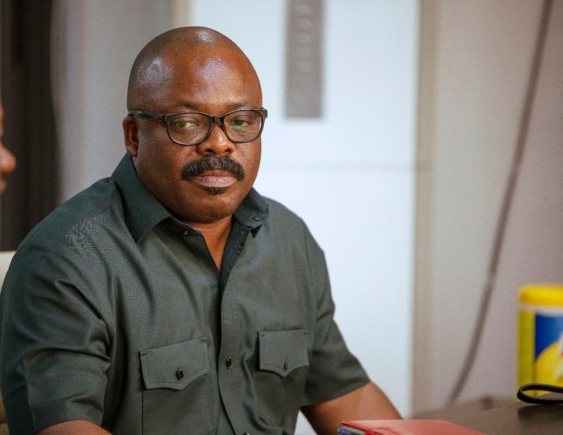
The debate was addressed in a statement by Dr. Callistus Mahama, who argues that conflating participation with primary responsibility is a logical error that undermines the pursuit of justice.
Dr. Mahama acknowledged the historical fact that African kingdoms and merchants were involved in the capture and sale of enslaved people. However, he emphasized that this involvement must be distinguished from the ownership and architecting of the transatlantic slave trade system.
“Africans did not design this system. Africans did not create the laws that turned human beings into property. Africans did not build the economic empires that grew out of this brutality,” Dr. Mahama wrote.
He argued that the system was financed by European capital, protected by European navies, and legalised through European and American laws. In this context, he stated, the architects of a system cannot be equated with those who were drawn into it.
Dr. Mahama cautioned against what he termed the “dangerous simplicity of blame-sharing,” which he said flattens history into an inaccurate moral equation where everyone is equally responsible. He drew a parallel to the Holocaust, noting that while some Jewish individuals were forced into administrative roles within the Nazi system, this fact does not cancel the crime of the Holocaust or invalidate claims for reparations from survivors.
“The same logic must apply consistently,” he stated.
The piece also addressed a recurring argument that emerges when reparations are discussed. Dr. Mahama suggested that focusing on African complicity serves to shift focus, redistribute blame, and weaken accountability for those who built and most benefited from the system.
“It is not accidental that African complicity is often raised at the very moment reparations are discussed,” he wrote. “Shared guilt is not equal guilt. And complexity should not be used as a shield against responsibility.”
Dr. Mahama asserted that acknowledging Africa’s internal history of involvement does not mean surrendering its claim to justice. He called for a balanced view that holds two truths simultaneously: that Africans participated in aspects of the slave trade, and that the system itself was designed, driven, and profited from primarily by external powers.
“We must not confuse participation with responsibility,” he concluded. “The call for reparations is not a claim of innocence. It is a claim of truth. And that truth is that one of the greatest crimes ever committed against humanity was organised, scaled, and sustained in ways that cannot be explained away by pointing to those who were drawn into its edges.”