



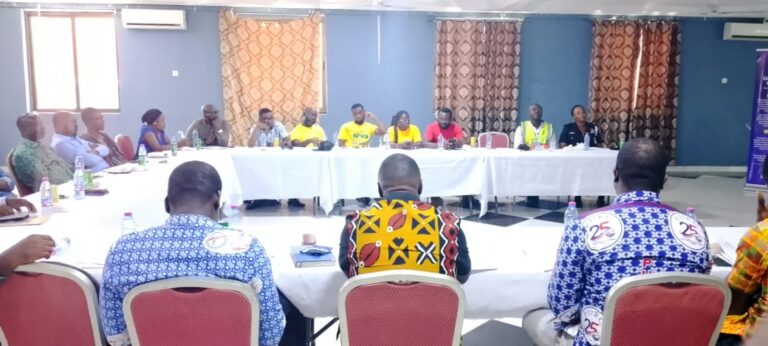
The Energy Commission of Ghana has engaged stakeholders in Techiman to deliberate on its Draft Electric Vehicle Charging Infrastructure and Battery Swap Systems Regulations.
The workshop, held at the AJ Plaza Hotel, brought together industry players, transport operators, policymakers, and civil society actors. The session was designed to introduce the draft regulatory framework and solicit feedback to support the development of a robust and inclusive electric vehicle (EV) ecosystem in the country.
Participants were guided through key provisions of the draft, including licensing requirements, safety standards, technical specifications, and consumer protection measures.
Speaking at the event, Joyce Caitlyn Ocansey, Program Coordinator for the Drive Electric Initiative at the Energy Commission, explained that the engagement was part of broader efforts to keep the public informed as the draft regulation moves toward becoming a Legislative Instrument (L.I.).
“The Commission is in Techiman to engage the public on the Draft EV Charging Station and Battery Swap System Regulations, which are currently undergoing parliamentary approval to become a Legislative Instrument (L.I.),” she stated.
Ms. Ocansey noted that the Commission had previously visited the municipality in 2022 to collect baseline data, which informed the need for the new regulations. She pointed to the growing presence of electric vehicles, particularly two- and three-wheelers, as a key reason for the regulatory push.
She also acknowledged concerns from the public, including artisans in the automobile sector, regarding the potential impact of the transition on jobs and livelihoods.
“Electric vehicles are already present in Techiman, particularly two- and three-wheelers. Currently, many users charge these vehicles at home, which increases household electricity demand and puts additional pressure on the national grid. This is one of the key reasons the regulation is necessary,” she said.
Ms. Ocansey further emphasized that the shift toward electric mobility is part of a global trend rather than a policy unique to Ghana, noting that many vehicle-exporting countries have set targets to transition fully to EVs as early as 2030.
She added that the Commission plans to support the transition through certification and training programmes aimed at helping mechanics upgrade their skills.
Participants at the workshop commended the Commission for its consultative approach, describing it as timely, while urging authorities to intensify public education and provide incentives to encourage EV adoption.
The Techiman engagement forms part of a nationwide stakeholder consultation process aimed at gathering input before the regulations are finalised and implemented.

