



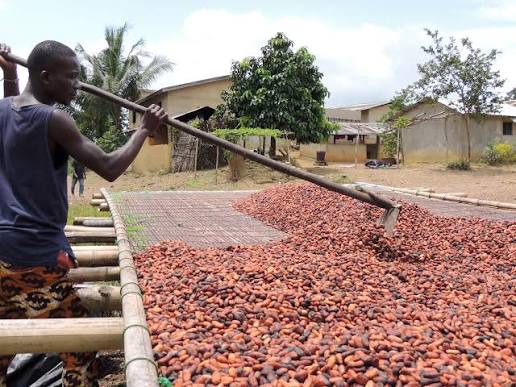
The world’s insatiable appetite for chocolate is facing a paradox. In the West African nations of Ivory Coast and Ghana, which together produce half the world’s cocoa, a crisis is unfolding. Farmers who grow the essential ingredient for our sweets are not being paid, and millions of tons of beans are going unsold.
This collapse in sales is the result of a perfect storm: a dramatic plunge in global cocoa prices, a surprising global surplus, and a unique government-controlled pricing system that has left the region’s farmers vulnerable.
Why Are Cocoa Sales Grinding to a Halt?
Unlike other commodities, cocoa in Ivory Coast and Ghana is not a free market. At the start of the harvest season in October, government-appointed regulators set a fixed price to guarantee farmers a stable income. This price is based on forward sales made to international traders months in advance.
Last October, that fixed price was set optimistically high—around $5,000 per metric ton in Ivory Coast** and nearly **$5,300 in Ghana.
The problem? The global market has since crashed. World cocoa futures have plunged to roughly $3,100 per ton, losing half their value this year alone.
For international traders, buying the expensive West African beans and selling them on the global market means taking a steep financial loss. Consequently, they have largely stopped buying. This has created a devastating domino effect: unsold stocks are piling up in warehouses, and farmers, who sold their harvest to local collectors at the government-set price, have gone unpaid since November.
A Global Glut and Shrinking Demand
The price crash is tied to a fundamental shift in supply and demand.
After prices nearly tripled to record highs in 2024, chocolate makers began to push back. To protect their profit margins, they reduced bar sizes, substituted cocoa butter with cheaper vegetable oils, and added more fillers like wafers and nuts. This has led to a significant drop in demand for raw cocoa beans.
At the same time, favorable weather has blessed farmers with bigger and healthier crops. The global market is now projected to have a surplus of 300,000 to 400,000 tons this season. Much of that excess is sitting in Ivory Coast and Ghana, which, unlike multinational corporations, lack the warehouse space and financing to hold onto the beans until prices recover.
Fighting for Survival: How Governments Are Responding
With nearly 2 million farmers and their families reliant on cocoa income and the national economies heavily dependent on it—cocoa accounts for nearly 40% of Ivory Coast’s export revenue and 15% of Ghana’s—the situation has forced emergency action.
· In Ghana, the cocoa regulator slashed the farmer price by nearly a third on February 12, bringing it down to around $3,580 per ton in an attempt to align with the market and entice buyers. The country estimates it has 50,000 tons of unsold stock.
· In Ivory Coast, the government launched a half-billion-dollar program to buy 100,000 tons of unsold beans directly from farmers. It is also planning to cut its official farmer price by roughly a third starting March 1, a month earlier than the usual mid-season adjustment.
What This Means for Your Chocolate Bar
While farmers suffer today, consumers are unlikely to see immediate relief at the checkout counter. There is typically a year-long lag between the price of raw cocoa and the price of a finished chocolate bar.
However, the crisis highlights the fragility of the global chocolate supply chain. It underscores the deep disconnect between the volatile international market and the fixed-income system meant to protect the impoverished farmers who are the industry’s foundation. For now, in the regions that grow the world’s chocolate, the cupboards are bare, while the warehouses remain full.

