



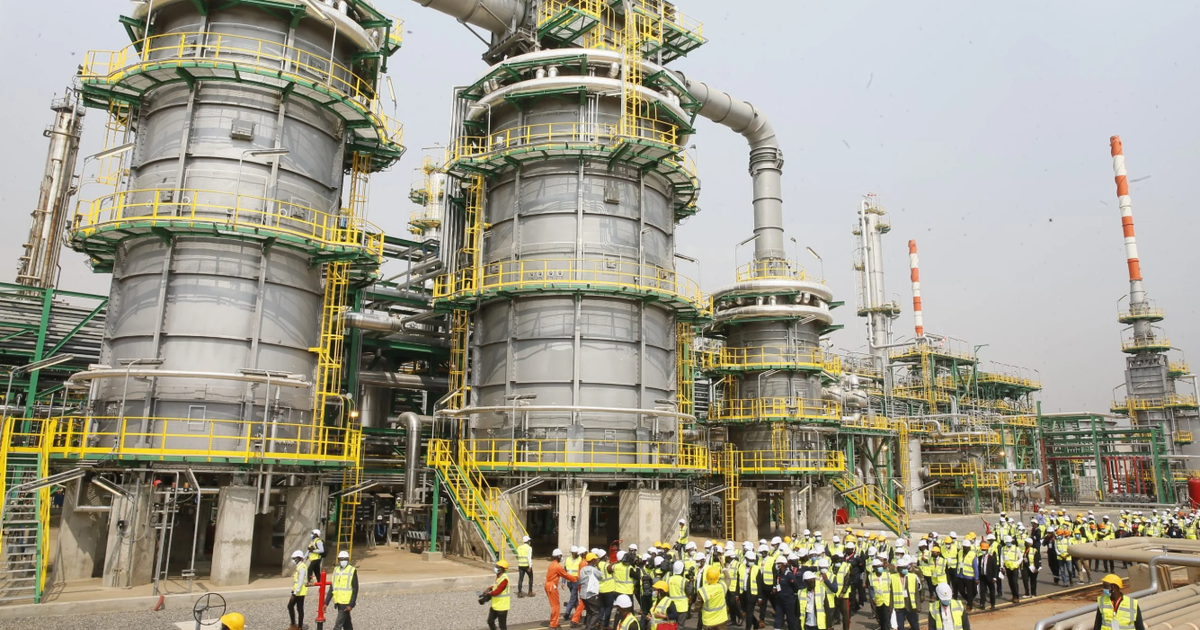
China has solidified its role as Africa’s primary external financier for energy infrastructure, providing a total of $66.1 billion in loans to the continent’s energy sector between 2000 and 2024, according to new data from the Global Development Policy Center.
The substantial investment makes energy the single largest sector for Chinese lending in Africa, surpassing other key areas like transport and mining. The funding has been channeled into a wide array of projects, including oil and gas extraction, refinery construction, power plants, hydroelectric dams, and electricity transmission grids.
Strategic Investments and Resource Access
The energy financing is part of a much broader Chinese lending strategy on the continent. The data indicates that over the same 24-year period, China issued a total of 1,319 loans worth $180.9 billion to African nations. These loans have been critical in funding large-scale infrastructure projects that underpin economic growth.
Analysts suggest the investments serve multiple strategic purposes for Beijing. By financing energy infrastructure, China secures access to Africa’s abundant natural resources, deepens bilateral trade relationships, and expands its geopolitical influence, creating a network of partnerships that spans the continent.
Top 10 Recipients of Chinese Energy Loans
The distribution of these loans has been heavily concentrated among a few nations, with oil-rich Angola receiving the overwhelming majority of the funds. Here are the top 10 African countries that attracted the most Chinese energy financing from 2000 to 2024:
- Angola — $27.3 billion (41 loans): Angola is the dominant recipient, receiving over six times the amount of the next country on the list. The majority of these loans have been tied to oil production and refinery infrastructure, often secured through crude oil supply agreements.
- South Africa — $4.5 billion (3 loans): China has supported major electricity generation projects in Africa’s most industrialized economy, aimed at addressing persistent power shortages that have hampered growth.
- Sudan — $4.2 billion (21 loans): Chinese financing was instrumental in developing Sudan’s oil export infrastructure, including critical pipelines and refineries.
- Ethiopia — $3.4 billion (19 loans): Loans have largely funded major hydroelectric dams, such as the Gilgel Gibe III dam, and associated transmission lines. These projects support Ethiopia’s ambition to become a regional energy exporter.
- Zambia — $3.1 billion (16 loans): Financing has focused on hydropower projects and electricity infrastructure, which are vital for powering the country’s copper mining industry.
- Uganda — $2.6 billion (7 loans): Loans are supporting the development of Uganda’s emerging petroleum sector, including oil fields and infrastructure for electricity expansion.
- Ghana — $2.3 billion (14 loans): China has financed power plants and grid improvements to help stabilize Ghana’s electricity supply and reduce chronic power outages.
- Equatorial Guinea — $1.8 billion (8 loans): Funding has been directed toward offshore oil production facilities and export infrastructure.
- Kenya — $1.8 billion (14 loans): Chinese loans have supported the development of geothermal energy sources, such as the Olkaria plant, and the expansion of the national electricity grid.
- Côte d’Ivoire — $1.6 billion (5 loans): Financing has been used for thermal power generation and industrial energy infrastructure to support the country’s economic hub.
A Geopolitical Battleground
China’s aggressive financing strategy has intensified competition with traditional Western partners and emerging players like Russia. While Western institutions such as the World Bank and European lenders have increasingly pivoted toward renewable energy projects and governance-linked conditionalities, China has remained a willing financier of large-scale, capital-intensive fossil fuel infrastructure.
Russia, meanwhile, has carved out a niche by focusing on nuclear energy partnerships and upstream oil and gas development, offering African governments an alternative strategic partner.
By stepping in to fund high-risk projects in both resource-rich and energy-deficient nations, Beijing has positioned itself as the preferred partner for many African countries seeking rapid, large-scale infrastructure development without the strict political conditions often attached to Western financing. As this competition heats up, Africa’s energy sector is poised to remain a key geopolitical battleground that will help shape the continent’s economic trajectory.

