



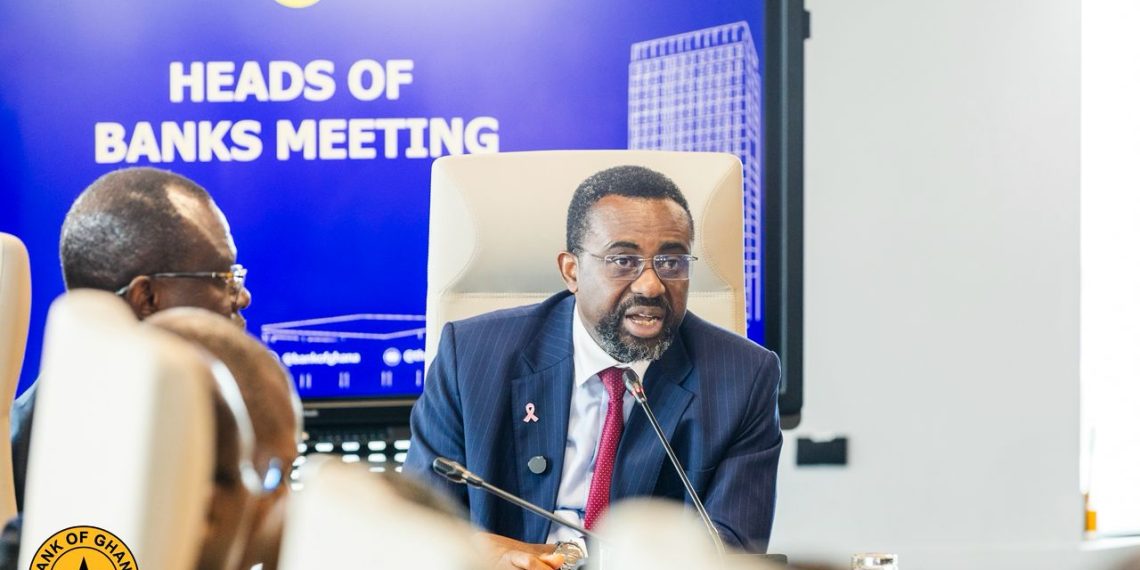
The Bank of Ghana (BoG) will transition this year from crisis-driven interventions to a consolidation phase aimed at entrenching macroeconomic stability and rebuilding institutional credibility, Governor Dr Johnson Pandit Asiama has announced.
Speaking at the inaugural Governor’s New Year Media Engagement in Accra on Friday, Dr Asiama said the shift follows a year of tough but essential policy measures in 2025 that stabilised the economy, restored policy credibility, brought order to the financial sector, and anchored inflation expectations after prolonged macroeconomic stress.
The central bank’s efforts yielded significant results: headline inflation fell steadily from 23.8 per cent in December 2024 to 5.4 per cent by December 2025, driven by disciplined monetary tightening, effective liquidity management, and clear policy communication.
“With stability now restored, our priority in 2026 is to consolidate these gains and ensure they translate into lasting market confidence,” Dr Asiama told editors and senior journalists.
He emphasised that monetary policy would remain cautious, data-driven, and forward-looking, prioritising consistency over short-term fixes.
The Governor highlighted several 2025 reforms that strengthened the economy, including greater reliance on public markets to enhance governance, transparency, and market discipline; a rules-based foreign exchange framework to curb abuse; and the domestic gold purchase programme, which moderated exchange rate pressures and rebuilt external buffers.
These measures helped push gross international reserves to more than US$13.8 billion — equivalent to about 5.7 months of import cover. “I have not seen such reserve levels since I joined the central bank in 1995,” Dr Asiama noted.
He also praised the passage of the Bank of Ghana (Amendment) Act in 2025, which bolstered the bank’s independence and accountability in line with international best practices while introducing stronger safeguards against central bank financing of government deficits.
“If these amendments had been in place earlier, some of the painful adjustments we experienced could have been avoided,” he added.
First Deputy Governor Dr Zakari Mumuni urged journalists to exercise caution in their reporting to protect financial market stability, noting that the public often relies on media coverage to make economic decisions.
“In this environment, the media is not just an observer — you transmit confidence, shape sentiment, and sometimes unknowingly participate in market dynamics,” Dr Mumuni said.
Second Deputy Governor Matilda Asante-Asiedu reaffirmed the bank’s commitment to promoting economic and financial journalism through initiatives such as the Governor’s Economic and Financial Story of the Year Award.
The engagement, designed to strengthen ties between the central bank and the media, was attended by senior BoG officials and leaders of key media associations, including Albert Kwabena Dwumfour (President, Ghana Journalists Association), Abdulai Awudu (President, Ghana Independent Broadcasters Association), David Sitsofe Tamakloe (President, Private Newspapers and Online News Publishers Association of Ghana), and Roger Agana (Acting President, Institute of Financial and Economic Journalists).
President of the Ghana Journalists Association, Mr Dwumfour, called for closer collaboration to combat misinformation through accurate reporting and targeted capacity-building programmes.

