



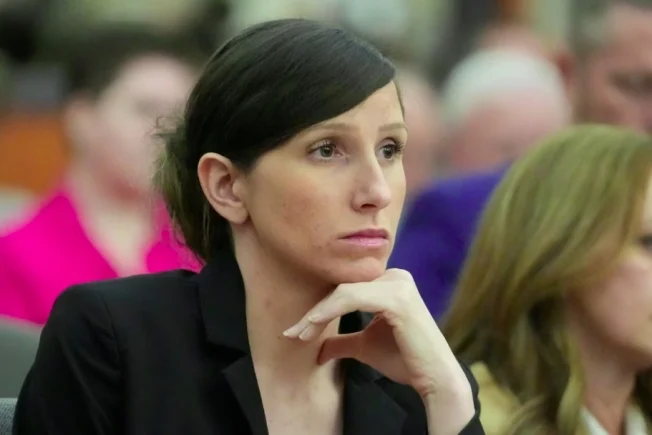
In a dramatic conclusion to a trial that has captivated the nation, a Utah jury on Monday found Kouri Richins, a real estate agent and self-published children’s author, guilty of the aggravated murder of her husband. Prosecutors successfully argued that she poisoned Eric Richins with a fatal dose of fentanyl in 2022, weaving a dark narrative of debt, infidelity, and cold calculation.
The verdict, delivered after less than three hours of deliberation, painted a picture starkly at odds with the image Richins cultivated as a grieving widow. In the wake of her husband’s death in March 2022, she had authored a children’s book intended to help families cope with loss.
Instead, the court heard a tale of premeditation. Summit County Prosecutor Brad Bloodworth laid out a case alleging that Kouri Richins was drowning in approximately $4.5 million in debt and was motivated by a false belief that she would inherit her husband’s multi-million dollar estate. He portrayed her as a woman planning a future with another man, unwilling to leave her husband but determined to leave him for his money.
“She wanted to leave Eric Richins but did not want to leave his money,” Bloodworth told the jury.
The prosecution’s case was built on a mountain of damning evidence. Investigators revealed that Richins had taken out nearly $2 million in life insurance policies on her husband without his knowledge. Text messages shown to the jury detailed an affair with a man named Robert Josh Grossman, in which she fantasized about leaving Eric, securing millions in a divorce, and remarrying.
However, the most chilling evidence came from the digital footprint on Richins’ own phone. A digital forensic analyst testified that her search history included queries such as “what is a lethal.dose.of.fetanayl,” “luxury prisons for the rich America,” and “if someone is poisned what does it go down on the death certificate as.”
Prosecutors detailed a two-pronged attack on Eric Richins’ life. They alleged that weeks before his death, on Valentine’s Day, Kouri Richins had attempted to poison him with a fentanyl-laced sandwich that caused him to black out. The fatal attempt came in March, when she allegedly slipped five times the lethal dose of the synthetic opioid into a cocktail he drank at their home.
In a poignant moment, Bloodworth replayed for the jury the 911 call Kouri Richins made the night of her husband’s death. He dismissed the defense’s characterization of the call as “the sound of a wife becoming a widow.” Instead, he argued, “It’s the sound of a wife becoming a black widow.”
As the guilty verdict for aggravated murder was read, along with convictions for attempted murder, forgery, and insurance fraud, Richins stared at the floor and took deep breaths. The five-week trial was abruptly shortened last week when her legal team rested its case without calling any witnesses, after Richins waived her right to testify. Her lawyers maintained that prosecutors had failed to prove their case beyond a reasonable doubt.
Following the verdict, an emotional scene unfolded as family members on both sides embraced, crying in the hallway outside the courtroom.
“Honestly I feel like we’re all in shock,” said Eric Richins’ sister, Amy Richins. “We got justice for my brother.” She stated the family’s focus would now turn to honouring his memory and supporting his sons.
Judge Richard Mrazik scheduled the sentencing for May 13—what would have been Eric Richins’ 44th birthday. The aggravated murder charge alone carries a mandatory sentence of 25 years to life in prison.

