



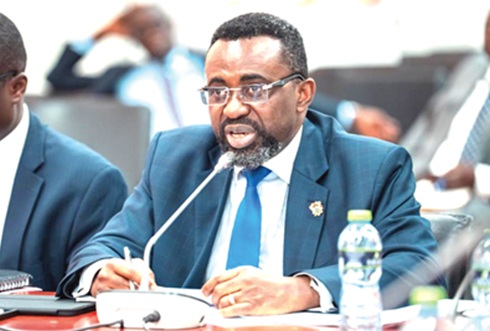
The Domestic Debt Exchange Programme (DDEP) placed significant strain on the balance sheets of banks in its initial phase, eroding capital buffers and restricting their ability to lend, the Governor of the Bank of Ghana (BoG), Dr. Johnson Pandit Asiama, has disclosed.
Appearing before the Parliamentary Committee on Economy and Development in Accra yesterday, Dr. Asiama acknowledged that while the programme was a necessary measure to restore Ghana’s debt sustainability, it forced financial institutions to grapple with reduced returns on government securities and a rise in non-performing loans (NPLs).
“The banking system entered 2025 still adjusting to the effects of the DDEP,” Dr. Asiama told the committee. He explained that the shock to bank balance sheets constrained the sector’s capacity to support economic activity in the immediate aftermath of the exercise.
However, the Governor provided an upbeat assessment of the current state of the industry, attributing a gradual recovery to ongoing recapitalisation efforts and enhanced regulatory oversight. He noted that key financial soundness indicators are now pointing toward renewed resilience and confidence.
Key Indicators Improve
Dr. Asiama highlighted that the banking sector’s Capital Adequacy Ratio (CAR) has improved to 17.5 per cent, which is comfortably above the regulatory minimum of 13 per cent. Furthermore, asset quality is showing signs of recovery, with the NPL ratio declining from 21.8 per cent to 18.9 per cent.
“Through recapitalisation efforts and close supervisory engagement, the banking system has strengthened considerably,” the Governor stated. He added that banks have developed a clear roadmap to further reduce the NPL ratio toward the 10 per cent target by the end of 2026.
The central bank chief expressed confidence that the industry is on a solid path to recovery, enabling it to once again play a pivotal role in financing economic growth.
Broader Economic Measures
Beyond the banking sector, Dr. Asiama detailed the broader monetary policy measures implemented to restore macroeconomic stability. He reiterated the Monetary Policy Committee’s commitment to a tight monetary policy stance to contain inflation and anchor expectations.
The BoG has also moved to address excess liquidity in the banking system to strengthen the transmission of its policy rate to market interest rates, a move aimed at bolstering price stability.
On the external front, the Governor highlighted efforts to rebuild Ghana’s buffers. International reserves have been strengthened by improved export earnings, remittance inflows, and the Domestic Gold Purchase Programme. Gold holdings surged from approximately 8.7 tonnes in 2021 to over 40 tonnes by October 2025.
Gold Portfolio Rebalancing
Addressing the resulting concentration risk—where gold’s share in reserves rose to about 42 per cent due to increased holdings and rising global prices—Dr. Asiama revealed that the central bank has undertaken a measured rebalancing of its portfolio. This involved converting a portion of the gold holdings into foreign exchange assets.
“This action did not represent a loss of Ghana’s national assets. The gold was simply converted into foreign exchange assets, which remained fully part of Ghana’s international reserves and continued to support the country’s external stability,” he clarified.
Dr. Asiama concluded that the suite of policy measures implemented by the central bank is yielding positive results, evidenced by a sharp decline in inflation, improved exchange rate stability, and stronger international reserves.

