



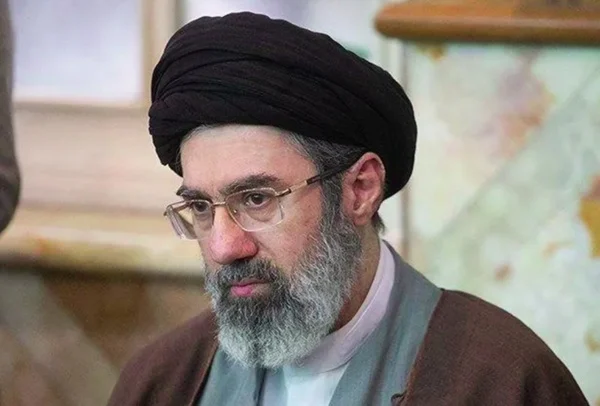
In a historic and potentially controversial transition of power, Mojtaba Khamenei has been named Iran’s new Supreme Leader, following the death of his father, Ayatollah Ali Khamenei, in recent US-Israeli strikes.
The appointment, confirmed by state media on Monday, ends weeks of speculation and marks a pivotal moment for the Islamic Republic. At 56, Mojtaba Khamenei inherits the most powerful position in Iran, commanding its armed forces, shaping its foreign policy, and serving as the ultimate authority on all state and religious matters.
Unlike his long-reigning father, the new Supreme Leader is an enigmatic figure who has largely operated in the shadows. He has never held a formal government position, delivered a public speech, or given a media interview. Only a handful of photographs of him are publicly available.
However, Western diplomatic cables released by WikiLeaks in the late 2000s painted a picture of a man wielding significant behind-the-scenes power. The AP news agency, citing those cables, reported that diplomats described him as “the power behind the robes” and a “capable and forceful” figure within the regime.
From War Front to Seminary
Born on September 8, 1969, in Mashhad, Mojtaba is the second of Ali Khamenei’s six children. He was educated at the elite Alavi School in Tehran. As a teenager of 17, he served brief stints at the front lines during the bloody Iran-Iraq War in the 1980s, an experience that cemented the regime’s deep-seated suspicion of the West.
In a move that surprised many observers, Mojtaba began his formal religious studies relatively late, at the age of 30, in the holy city of Qom. He had not donned clerical attire before this point. Currently a mid-ranking cleric, his religious standing could prove to be an obstacle to his acceptance.
In the weeks leading up to his selection, pro-regime media outlets and officials began referring to him as “Ayatollah,” a senior clerical title, in an apparent effort to bolster his religious credentials. This move mirrors the path of his father, who was swiftly elevated to the rank of “Ayatollah” after assuming the leadership in 1989.
A History of Political Interference
Mojtaba Khamenei’s name first entered the political fray during the contentious 2005 presidential election that brought hardliner Mahmoud Ahmadinejad to power. Reformist candidate Mehdi Karroubi publicly accused him of orchestrating interference through the Islamic Revolutionary Guard Corps (IRGC) and the Basij militia, alleging they distributed funds to secure Ahmadinejad’s victory.
Similar accusations resurfaced four years later. The disputed 2009 re-election of Ahmadinejad sparked the massive Green Movement protests. Demonstrators openly chanted slogans against the idea of a hereditary succession, shouting, “Mojtaba, shame on you! Leave the leadership to your father!”
Mostafa Tajzadeh, a former deputy interior minister imprisoned for seven years following the election, claimed his incarceration was due to “the direct wish of Mojtaba Khamenei.” Iranian sources also told BBC Persian that Mojtaba personally met with one of the protest leaders, Mir-Hossein Mousavi, in 2012 to pressure him into ending his opposition.
The Challenge of Leadership
Mojtaba Khamenei now faces the daunting task of unifying a nation reeling from political and economic turmoil, and convincing a skeptical public that he is the right leader to steer the country forward. His ascension also deepens concerns that the Islamic Republic, founded in 1979 as a rejection of monarchy and hereditary rule, is transforming into a dynastic system.
Internationally, his leadership is expected to mean a continuation of the hardline policies of his father. Analysts suggest that a man who has lost his father, mother, and wife in the very strikes that killed the former leader is unlikely to show any inclination toward bowing to Western pressure.
The threat is also deeply personal. Just last week, Israel’s defense minister declared that whoever succeeded Ali Khamenei would be “an unequivocal target for elimination,” placing the newly appointed leader directly in the crosshairs of Iran’s arch-enemy.

