



A comprehensive audit of government arrears inherited from the previous administration has exposed widespread fraud, fictitious debts, and systemic attempts to loot the public purse, with auditors rejecting GH¢8.1 billion in invalid payment claims.
The probe, conducted by the Ghana Audit Service in collaboration with global firms EY and PwC, examined GH¢68.7 billion in unpaid Interim Payment Certificates, invoices, and Bank Transfer Advices submitted by ministries, departments, and agencies. Of this amount, only GH¢45.4 billion was validated as legitimate, while GH¢13.3 billion remains under review pending further documentation .
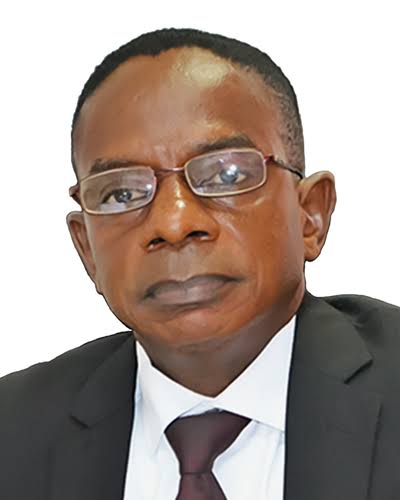
Presenting the findings to Parliament on Tuesday, Deputy Finance Minister Thomas Nyarko Ampem described the revelations as evidence of a “rotten system designed to fleece the people of Ghana” .
Phantom Accounts and Fictitious Debts
Among the most alarming discoveries was a GH¢10.5 million payment recorded as transferred to a “Buffer Account” at a commercial bank. Investigators found the account number did not exist in the bank’s system and did not conform to its account numbering format, leading auditors to conclude the account was entirely fictitious .
“The bank confirmed that it had never received such payment. The account number cited did not exist within the bank’s records,” Mr. Ampem told Parliament, suggesting deliberate attempts to siphon public funds .
In another shocking finding, the Ministry of Trade and Industry submitted a request for GH¢89.4 million as government contributions to interest payments under the One District, One Factory initiative. The amount was to be transferred to five commercial banks. However, when auditors contacted the banks, every single one denied being owed any amount by the government under the arrangement .
“According to the auditors, the said GH¢89.4 million debt was fictitious. Without the audit intervention, a whopping GH¢89.4 million of hard-earned public money could have been disbursed to settle this non-existent liability,” Mr. Ampem stated .
The revelations have prompted the government to commission a full forensic audit of the entire 1D1F programme, particularly as official records indicate GH¢391 million had already been spent on interest subsidies under the initiative as of the end of 2024 .
Recycled Claims and Missing Supplies
The audit uncovered GH¢4.4 billion in “recycled” claims, where invoices already settled between 2020 and 2024 were resubmitted for repeat payments. The Ministry of Roads and Highways accounted for the largest portion with GH¢3.6 billion, followed by the Ministry of Health with GH¢384.8 million and the Ministry of Energy with GH¢216.7 million .
Discrepancies also emerged in agricultural supplies under emergency relief programmes. Records showed payments for 34,000 metric tonnes of rice during a 2024 dry spell, but the Ministry of Food and Agriculture received and distributed only 24,000 metric tonnes, leaving 10,000 metric tonnes unaccounted for despite payment having been made .
Similarly, documentation indicated deliveries of 100,000 metric tonnes of maize valued at GH¢771.2 million, yet only 11,900 metric tonnes were actually supplied .
Additional irregularities included GH¢293 million in unsupported Bank Transfer Advices linked to six ministries, with the Ministry of Gender, Children and Social Protection accounting for GH¢241.2 million, as well as GH¢160 million in unfounded teacher trainee allowance arrears .
Government Vows Prosecution and Reform
Presenting the report on behalf of Finance Minister Dr. Cassiel Ato Forson, Mr. Ampem declared that the Ministry of Finance would no longer serve as a “rubber stamp for weak controls and falsified claims” .
The report has been formally referred to the Attorney-General for investigation and prosecution of all individuals and institutions implicated in the fraudulent practices .
“Those who abused their offices, colluded with contractors, falsified records, or attempted to loot the public purse through the back door will be held to account,” Mr. Ampem emphasised, describing the findings as evidence of “systemic plunder and abuse of the public financial management system” .
He stressed that the Mahama administration “refuses to accept this rotten system. We refuse to normalise waste, and we refuse to ask the Ghanaian people to pay for fraud” .
The government has announced that stricter verification protocols will be implemented for all future payments, with no disbursements to be made without full verification and no commitments entered into without budgetary allocation .
First Deputy Speaker Bernard Ahiafor has referred the report to Parliament’s Public Accounts Committee, which is expected to report back to plenary within three weeks .
Public reaction has been swift, with civil society organisations and social media users demanding accountability and swift justice. Dr. Forson has indicated that names of individuals involved in the questionable claims may be published soon, intensifying pressure on former officials from the previous administration .
The audit marks a significant step in efforts to restore fiscal integrity as Ghana continues to navigate economic challenges following the 2024 elections.

