



A political debate has emerged following Ghana’s 2026 State of the Nation Address (SONA), after a prominent opposition figure publicly questioned the use of cocoa pods as a stage decoration at the event.
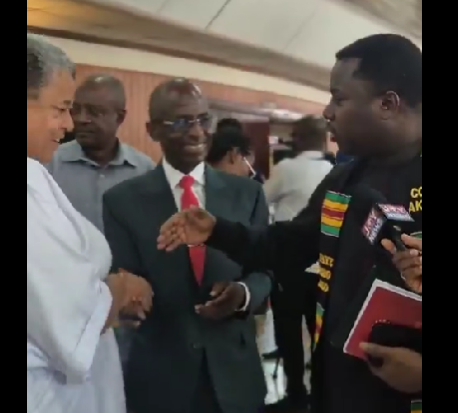
Johnson Asiedu Nketiah, the General Secretary of the National Democratic Congress (NDC), criticised the display shortly after President John Dramani Mahama delivered his address to parliament. The visual element, which featured large cocoa pods prominently on stage, became the focal point of a disagreement between Mr. Asiedu Nketiah and the Minister of Information, Dr. Ntim Fordjour.
Mr. Asiedu Nketiah argued that the display was an unnecessary political spectacle that detracted from the event’s seriousness. He contended that while symbolism has its place, Ghanaian farmers and citizens are more concerned with tangible government action.
“What farmers want to see are practical measures—stable producer prices, better infrastructure for cocoa growing areas, and genuine support for the industry—not large props on a stage,” Mr. Asiedu Nketiah is reported to have said. He emphasised that the focus should remain on substantive policy outcomes rather than visual theatrics.
In response, Dr. Ntim Fordjour defended the decision, stating that the cocoa pods were a deliberate and meaningful symbol. He explained that the display was designed to visually represent the government’s commitment to the cocoa sector, a cornerstone of Ghana’s economy and the primary livelihood for millions of citizens. Supporters of the display echoed this view, suggesting it was an effective way to highlight agricultural policy initiatives in a setting often dominated by formal rhetoric.
The exchange quickly became a trending topic on social media, drawing mixed reactions from the Ghanaian public. Some citizens applauded Mr. Asiedu Nketiah for calling attention to what they perceived as misplaced priorities and an overemphasis on stagecraft at a formal national event. Others, however, viewed the criticism as an unnecessary focus on a minor detail, arguing it detracted from more pressing policy discussions.
Political analysts suggest the incident underscores the highly scrutinised nature of major national events like the SONA, where even symbolic details can become flashpoints for partisan debate. While visual aids can be effective in drawing attention to key sectors like agriculture, they also risk sparking controversy over whether they are used to overshadow a lack of concrete policy progress.
The disagreement highlights the ongoing public expectation that the government’s symbolic gestures, particularly regarding vital industries like cocoa, must be matched with decisive and effective action that directly benefits the Ghanaian people.

