



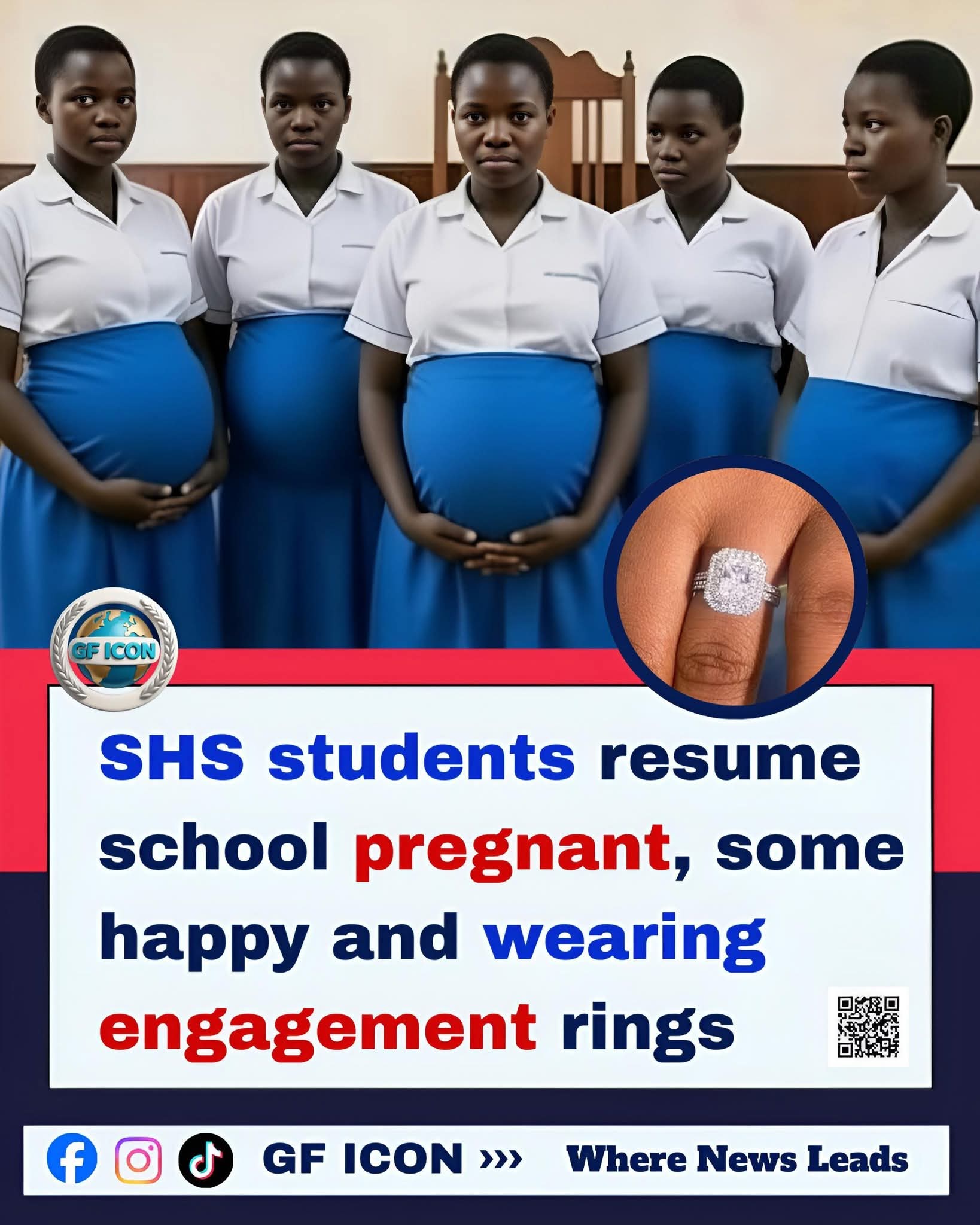
A growing crisis of teenage pregnancy among students in basic and senior high schools has sparked urgent calls from educational stakeholders in the Eastern Region for a review of Ghana’s laws on sexual consent.
The concerns were raised at a meeting in Koforidua organized by Plan International Ghana as part of activities marking the Day of the African Child. Heads of senior high schools (SHS) in the region painted a grim picture of the situation, revealing that some female students have returned to school not only pregnant but also wearing engagement rings.
“Some female students returned to school pregnant and wearing engagement rings. They got impregnated and were forced into marriage,” disclosed Mrs. Cynthia Anim, Headmistress of Kwahu Nkwatia Presbyterian Senior High School. She noted that while the Ghana Education Service (GES) policy prohibits the dismissal of pregnant students, the situation presents significant challenges. “I allowed them to stay in school. I only asked them to remove the rings. In all this, it will get to a stage they will drop out of school when the belly protrudes,” she explained.
Mrs. Anim, a former Eastern Regional Officer for Girls’ Education, stressed that while school heads support the government’s policy of keeping girls in school during pregnancy, its implementation has revealed critical flaws. “We the heads of senior high schools are in agreement with that government policy, but we realized that the stakeholders have to go back to the drawing board and the government as a whole to review it… because the students are abusing it and doing their own things,” she stated.
A Legal Loophole?
Central to the discussions was a perceived contradiction in Ghanaian law, which sets the age of sexual consent at 16 but requires individuals to be 18 to legally marry. Stakeholders argue this discrepancy creates a dangerous window of vulnerability for young girls.
“Government is saying that a person can go to bed with whoever he chooses at age 16,” pointed out Patricia Birago, Eastern Regional Girls’ Education Officer at GES. “So if a girl doesn’t start KG early, by 16 she is in school and legally free to have sex and at age 18 can even go ahead and marry. So we have realized that our girls are getting pregnant and they even go and marry and come back to school with their rings on.” She argued that this legal clause undermines the authority of school officials to address such situations, as education at the basic and SHS level should be the priority, not marriage.
This sentiment was echoed by Ebenezer Acheampong, the New Juaben North Director of the National Commission for Civic Education (NCCE), who added his voice to the call for an urgent review of the consent age in light of the alarming data.
Alarming Statistics
The scale of the problem was underscored by national statistics. In 2020 alone, a staggering 109,888 adolescent girls were impregnated in Ghana. Of that number, 2,865 were between the ages of 10 and 14, while 107,023 were aged 15 to 19. The Eastern Region recorded the second-highest rate of teenage pregnancy in the country during this period.
Plan International Steps In
In response to the escalating crisis, Plan International Ghana has launched a data collection and diagnostic project focused on teenage pregnancy. The initiative is targeting seven districts in the Eastern Region with high prevalence rates: Okere, Akuapem North, Upper Manya Krobo, Atiwa East and West, and New Juaben North and South.
Kofi Adade Debrah, the Eastern Regional Unit Manager for Plan International Ghana, stated that the project aims to conduct a rigorous analysis of the situation on the ground. The goal is to develop evidence-based remedies to protect the gains made in gender parity at the basic and SHS levels and ensure more girls can transition to tertiary education and contribute to the highest levels of decision-making in the country.

