



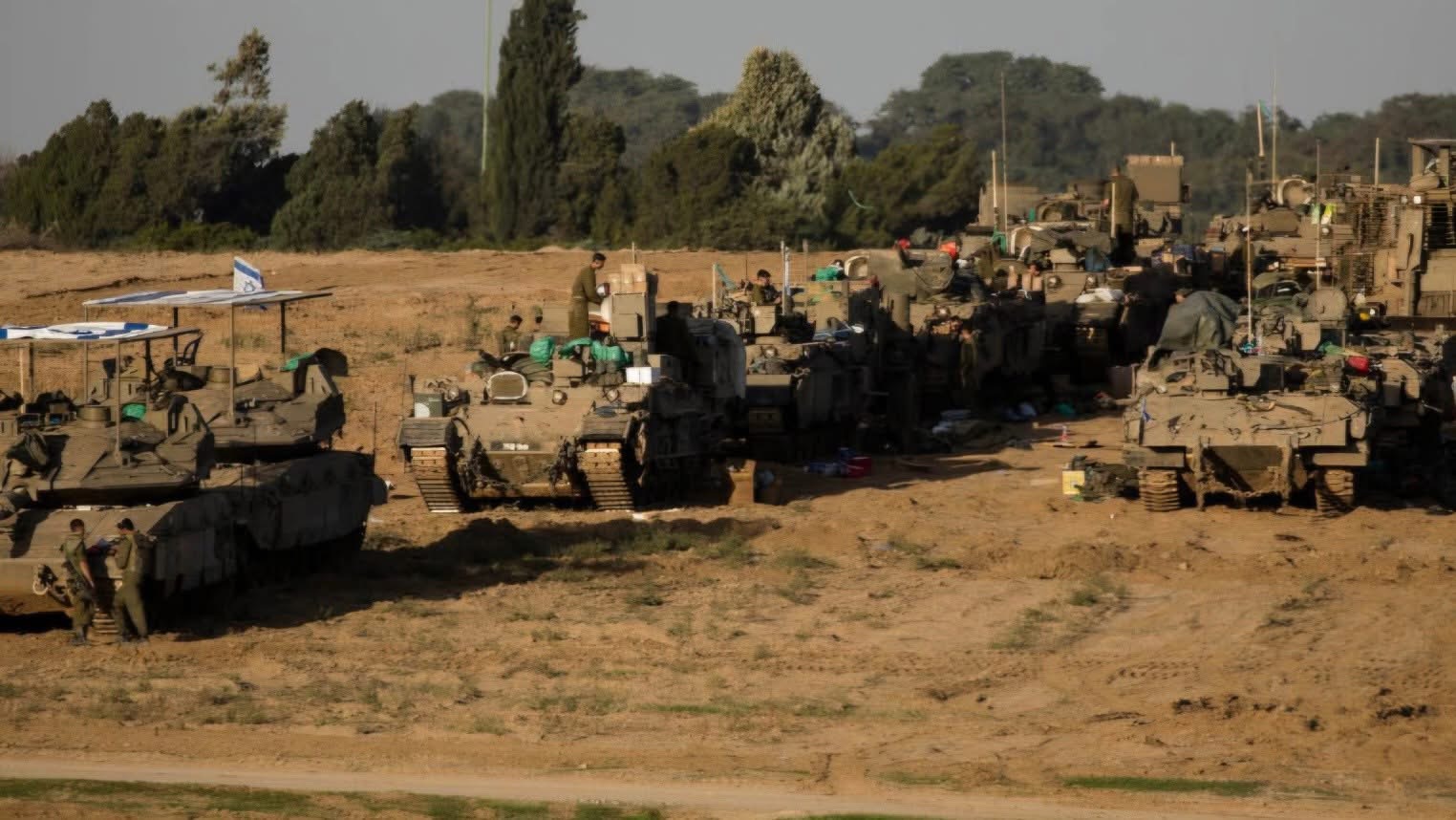
Israel has formally rejected key provisions of a landmark US‑Iran agreement aimed at ending the war across the Middle East, with Defence Minister Israel Katz declaring that Israeli forces will not withdraw from southern Lebanon despite the deal stipulating a permanent cessation of all military operations there.
Katz’s statement, made on Monday morning, marks the first official Israeli response to the framework agreement announced on Sunday – and sets the stage for a deep diplomatic rift between Jerusalem and Washington even as the pact is hailed as a breakthrough by both Washington and Tehran.
“Prime Minister Benjamin Netanyahu and I are leading a clear policy stating that the IDF will remain in the security zones in Lebanon, Syria, and Gaza without any time limit, in order to protect the border and Israeli communities against jihadist elements,” Katz said in a written statement.
He added that the areas would be “cleared of local residents” and that “all terrorist infrastructure, above and below ground – including the houses in the contact villages that served as terrorist outposts – will be destroyed”.
The Deal: What Was Agreed
The US‑Iran framework agreement, mediated by Pakistan and announced on Sunday by Pakistani Prime Minister Shehbaz Sharif, calls for:
· “The immediate and permanent termination of military operations on all fronts, including in Lebanon”.
· Reopening of the Strait of Hormuz, a vital artery for global oil shipments, within days.
· Immediate end to the US naval blockade of Iranian ports.
· A 60‑day ceasefire during which Iran and the United States will negotiate the specifics of a final agreement, including Iran’s nuclear programme and sanctions relief.
· A formal signing ceremony scheduled for Friday in Switzerland.
Iranian Foreign Ministry spokesman Esmail Baghaei insisted on Monday that Lebanon is an inseparable part of the understanding. “The word Lebanon is used three times in the understanding,” he said. “It is mentioned that ending the war includes that in Lebanon and respecting the country’s sovereignty and territorial integrity.” He warned that the United States bears responsibility for any breach by other parties, including Israel.
Pakistani officials confirmed that the deal took shape over months of back‑channel talks involving Qatar, with “nearly 14 to 15 hours of lengthy talks” held in Tehran in the final stretch. Neither Israel nor Hezbollah was a direct party to the negotiations.
Israel’s Defiant Stance: ‘Trump’s Agreement Does Not Bind Us’
In a series of statements issued on Monday, Israeli leaders explicitly rejected any obligation to abide by the Lebanon‑related provisions.
“Trump’s agreement does not bind us. Israel is not subject to the United States, and we are an independent and sovereign nation!” wrote National Security Minister Itamar Ben‑Gvir on X.
He called for the “dismantling of Hezbollah” and argued that Israel must “not withdraw from any territory that our fighters have captured and cleared of terror infrastructure.”
Katz, meanwhile, described Israel’s seizure of territory in Lebanon as “one of the IDF’s greatest achievements in the War of Rebirth” and said Israel would “oppose an IDF withdrawal from Lebanon – despite all existing and future pressures.”
He also issued a stark warning to Tehran: “If Iran attacks Israel because of events in Lebanon, we will strike it with full force.” Katz stated that Netanyahu had personally conveyed this position to US President Donald Trump, and that he himself had discussed it with US Secretary of War Pete Hegseth on Sunday.
Behind the Headlines: A War‑Weary Region
The conflict now entering a fragile truce phase began in late February 2026, when the United States and Israel launched coordinated strikes on Iranian targets. What was envisaged as a swift campaign soon spiralled into a multi‑front war that has killed thousands and displaced millions.
The fighting in Lebanon – which erupted on 2 March when Hezbollah opened fire on Israel in support of Tehran – has been the deadliest spillover of the conflict. Lebanese officials report nearly 3,800 people killed and an estimated 1.2 million people displaced by the Israeli offensive against Hezbollah in southern Lebanon.
Israeli forces have occupied a swath of southern Lebanon, estimated by officials at roughly 5% of Lebanese territory, and have been systematically demolishing villages in areas they control, citing the presence of Hezbollah infrastructure.
Fighting subsided significantly after the announcement of the deal on Sunday. Security sources told Reuters that Hezbollah’s last attack on Israel came shortly before midnight, and the group has not claimed any fresh operations since. Israeli strikes have also slowed, though isolated artillery fire was still reported in southern Lebanese towns on Monday.
But uncertainty remains high. Displaced Lebanese families were warned by local authorities not to rush home. Mona Mazeh, a woman sheltering in Beirut’s Hamra district, told journalists: “Frankly, we are hesitant; Israel cannot be trusted.”
‘Catastrophic for Israel’ – Domestic Critics React
Within Israel, the US‑Iran agreement has triggered fierce criticism from across the political spectrum.
Former defence minister and bitter Netanyahu critic Avigdor Liberman described the deal on X as “a catastrophe from Israel’s perspective.”
Opposition figure Yair Golan said the deal had been “made over Israel’s head,” reflecting a widespread sentiment that Jerusalem was sidelined in negotiations despite having been Washington’s primary partner in launching the war.
A senior Israeli official, speaking to Channel 13 News, said there was “broad consensus across the Israeli leadership, from Netanyahu to the military’s top command” that the agreement was deeply problematic, with the official calling it “catastrophic for Israel.” The official noted that the framework fails to address core Israeli objectives repeatedly outlined by leaders: dismantling Iran’s nuclear programme, reducing its ballistic missile capabilities, ending its support for proxy groups like Hezbollah and Hamas, and creating conditions for regime change in Tehran – none of which the deal delivers.
Tensions with Washington: Trump Calls Netanyahu ‘Very Difficult’
The Israeli rejection has laid bare deepening strains between Netanyahu and Trump, whose administration brokered the deal.
Speaking to The New York Times on Sunday, Trump described Netanyahu as “a very difficult guy” and argued that the Israeli leader should be grateful for US efforts.
“He should be very thankful to us for doing this. Because if Iran had a nuclear weapon, Israel wouldn’t be around for two hours,” Trump told the newspaper.
Trump also expressed anger at what he described as Israel’s last‑minute attack on Beirut’s southern suburbs, which came just hours before the deal was due to be announced.
“Why did Bibi have to do a fucking attack? I was so pissed off. I let him know. He has no fucking judgement,” Trump told Axios. He said the attack “shook it up. It delayed the signing by a few hours.”
This is not the first public clash. Earlier this month, Axios reported a heated phone call in which Trump told Netanyahu he was “fucking crazy” – a comment the president later acknowledged, saying he was “a little bit perturbed” at what he saw as Netanyahu’s refusal to de‑escalate fighting in Lebanon.
Despite the friction, Netanyahu’s office has not publicly commented on the deal. A spokesperson told the Associated Press only that Israel “will defend itself against threats to its security.”
International Reactions: Lebanon Welcomes, Europe Cautiously Backs
Lebanese President Joseph Aoun welcomed the US‑Iran agreement, expressing hope that it would translate into “practical steps that will put a definitive end to the cycle of violence.”
Hezbollah has not formally commented on the deal but has previously indicated support for Tehran’s drive to secure a Lebanon ceasefire. The group said earlier that it “would not accept any future attacks on the country” and stressed that “there could be no return to the situation that existed before 2 March.”
In a sign of cautious international backing, the leaders of the UK, France, Germany and Italy issued a joint statement congratulating the parties and reiterating that Iran “must never acquire a nuclear weapon.” They said they were “prepared to lift relevant sanctions in response to clear, verifiable steps by Iran on its nuclear programme.”
British Prime Minister Sir Keir Starmer called the announcement “a hugely important step forward in ending the war, ensuring regional stability and reopening the Strait of Hormuz.”
The European Union has also called for full implementation of UN Security Council Resolution 1701, which demands respect for Lebanon’s sovereignty and territorial integrity, though that call has so far been ignored by Israel.
Global Economic Impact: Oil Prices Fall, Markets Rally
The deal has already had an immediate effect on global energy markets.
Brent crude futures fell approximately 5% on Monday, and stock markets rallied in response to the news that the Strait of Hormuz – through which approximately 20% of the world’s oil passes – is expected to reopen within days. In a celebratory post on Truth Social, Trump wrote: “Ships of the World, start your engines. Let the oil flow!”
However, shipping companies have warned that clearing mines from the waterway could take weeks, and oil production in the region has halved during the conflict. Analysts note that prices remain higher than before the war and a full recovery will take months.
The economic pain from high energy prices has become a political liability for Trump ahead of November’s midterm elections, adding pressure on his administration to deliver a durable resolution.
What Happens Next
The formal signing ceremony remains scheduled for Friday in Switzerland. Between now and then, diplomats will be watching closely to see whether:
· Israel follows through on Katz’s threat to maintain its occupation of southern Lebanon, potentially drawing Iran back into the conflict.
· Hezbollah resumes rocket fire if Israeli forces do not withdraw.
· The United States can exert sufficient pressure on Netanyahu to comply with the terms Washington has just negotiated with Tehran.
The BBC’s Frank Gardner noted that with all the dramatic twists and turns of recent weeks, “no one can be sure that the path towards that day will be straightforward.”
What is clear is that the ceasefire – if it holds even imperfectly – offers a reprieve for a region battered by nearly four months of war. But as long as Israeli tanks remain in southern Lebanese villages and displaced families are warned not to return home, the peace remains provisional at best.


