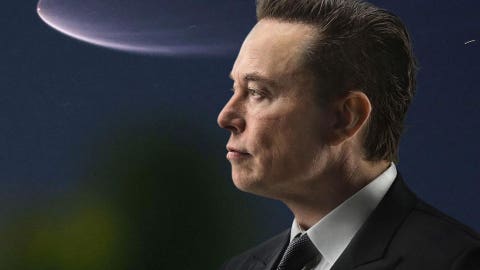
Elon Musk has officially become the world’s first trillionaire, Forbes declared Friday, as SpaceX completed the largest initial public offering in history and began trading on the Nasdaq at $150 per share, vaulting the rocket company’s market capitalization to nearly $2 trillion.
The milestone, once considered unthinkable, marks a new era in global finance. According to Forbes estimates, the IPO boosted Musk’s personal fortune to $1.1 trillion as of Friday morning. His net worth surged by $188 billion from Thursday evening, when SpaceX priced its offering of 555.6 million Class A shares at $135 each, giving the company a $1.77 trillion valuation. The offering raised a staggering $75 billion, shattering the previous record of $29.4 billion set by Saudi Aramco in 2019.
With shares opening 11 percent above the IPO price and climbing further in early trading, Musk’s stake in SpaceX—4.8 billion shares plus 350 million stock options—is now worth approximately $715 billion, giving him a 38 percent ownership. Combined with his Tesla holdings, valued at roughly $280 billion, and other assets, his total wealth crossed the trillion‑dollar threshold. Musk retains about 82 percent of SpaceX’s voting power, ensuring his continued dominance over the company’s strategic direction.
From $2 Billion to a Trillion in 14 Years
Musk first appeared on Forbes’ annual World’s Billionaires list in 2012 with a net worth of $2 billion, ranking 634th globally. Just nine years later, in January 2021, he became the world’s wealthiest person as Tesla’s shares soared, surpassing Jeff Bezos. Since then, his fortune has grown at a pace unmatched even by past titleholders such as Bezos, Bill Gates, and Bernard Arnault. For context, Larry Page, the world’s second‑richest person, is worth approximately $304 billion—less than a third of Musk’s current wealth.
“A Bet on Elon Musk” — Investors Ignore Massive Losses
Despite the fanfare, SpaceX remains unprofitable. The company reported a net loss of $4.94 billion in 2025 and a further $4.28 billion loss in the first quarter of 2026, with cumulative deficits reaching about $41.3 billion since its founding in 2002. In its IPO prospectus, SpaceX warned that it “may not achieve profitability in the future.” Yet investor demand overwhelmed supply: the offering was nearly four times oversubscribed, drawing more than $250 billion in orders from institutions and over $100 billion from retail investors.
“Much like Tesla, SpaceX is a bet on Elon Musk,” said Matt Kennedy, senior strategist at Renaissance Capital. “A market cap of $1.5 trillion to $2 trillion would certainly throw all traditional valuation methodologies out the window, and is instead best characterized as the ‘Elon Musk premium.’”.
A Tech, Space and AI Colossus
SpaceX, founded by Musk in 2002, has evolved from a scrappy rocket startup into a multifaceted industrial giant. Its Falcon 9 rockets and Dragon spacecraft are vital to NASA’s commercial crew and cargo missions to the International Space Station. The Starlink satellite internet network, the company’s only profitable unit, has expanded beyond residential users into business, maritime, aviation, and government markets. In February 2026, SpaceX merged with Musk’s artificial intelligence startup xAI, folding in the Grok chatbot and the X social media platform. The company now pitches space‑based AI computing infrastructure as a core long‑term growth driver, claiming “the only commercially viable path to building orbital AI compute at scale” with potential AI revenue of up to $26.5 trillion.
A New Class of Millionaires
The IPO has also minted thousands of new millionaires and several new billionaires among SpaceX employees and early investors. The company broke with IPO convention by setting a fixed $135 share price rather than a preliminary range. Goldman Sachs led the offering, with Morgan Stanley, Bank of America, Citigroup, and JPMorgan Chase among the co‑underwriters. Retail investors gained access to shares on the first day through platforms including Schwab, Fidelity, Robinhood, SoFi, and E*Trade.
“The Economy Is Probably Twice Its Current Size in Five Years”
In an exclusive interview with Forbes at the Forbes Innovator 250 Celebration in Palo Alto in May, Musk predicted dramatic technological and economic shifts ahead. “In five years, digital intelligence will exceed the sum of all human intelligence. In five years, there might be at least 100 million humanoid robots, but maybe a billion,” he said. “I predict the economy is probably twice its current size in five, maybe six, years. In five to seven years, you’re going to hit a doubling period, in plus or minus a few years, you’ll see giant changes.”
Moments before the opening bell on Friday, Musk addressed employees and investors from SpaceX’s Texas headquarters. “It is certainly hard to believe that a little company that started in a warehouse in El Segundo is now going public with the largest IPO ever,” he said. “I gave SpaceX less than a 10 percent chance of succeeding at all.” He then pushed the button to begin trading as Elton John’s 1972 song “Rocket Man” played in the background. “We want to be able to take anyone who wants to go to the Moon, anyone who wants to go to Mars, or anywhere in the solar system,” he added.
A Milestone and a Flashpoint
The coronation of the world’s first trillionaire is expected to intensify debates over wealth inequality and the concentrated power of America’s tech founders. Musk’s net worth now exceeds the national GDPs of several developed economies, including Taiwan, Ireland and Sweden. Yet for his supporters, the achievement underscores how rapidly wealth can be created in an interconnected, technology‑driven world.
“Elon Musk’s ascent to a $1 trillion fortune represents a milestone once considered unimaginable, highlighting how rapidly wealth can be created in an increasingly interconnected and technology‑driven world,” said Matt Durot, Deputy Editor of Wealth at Forbes. “Forbes remains the definitive source for understanding who is creating wealth, how they are creating it, and what it means for the future of business, and today marks a new chapter in the evolution of global business and entrepreneurship.”
SpaceX’s ticker symbol on the Nasdaq is SPCX.