



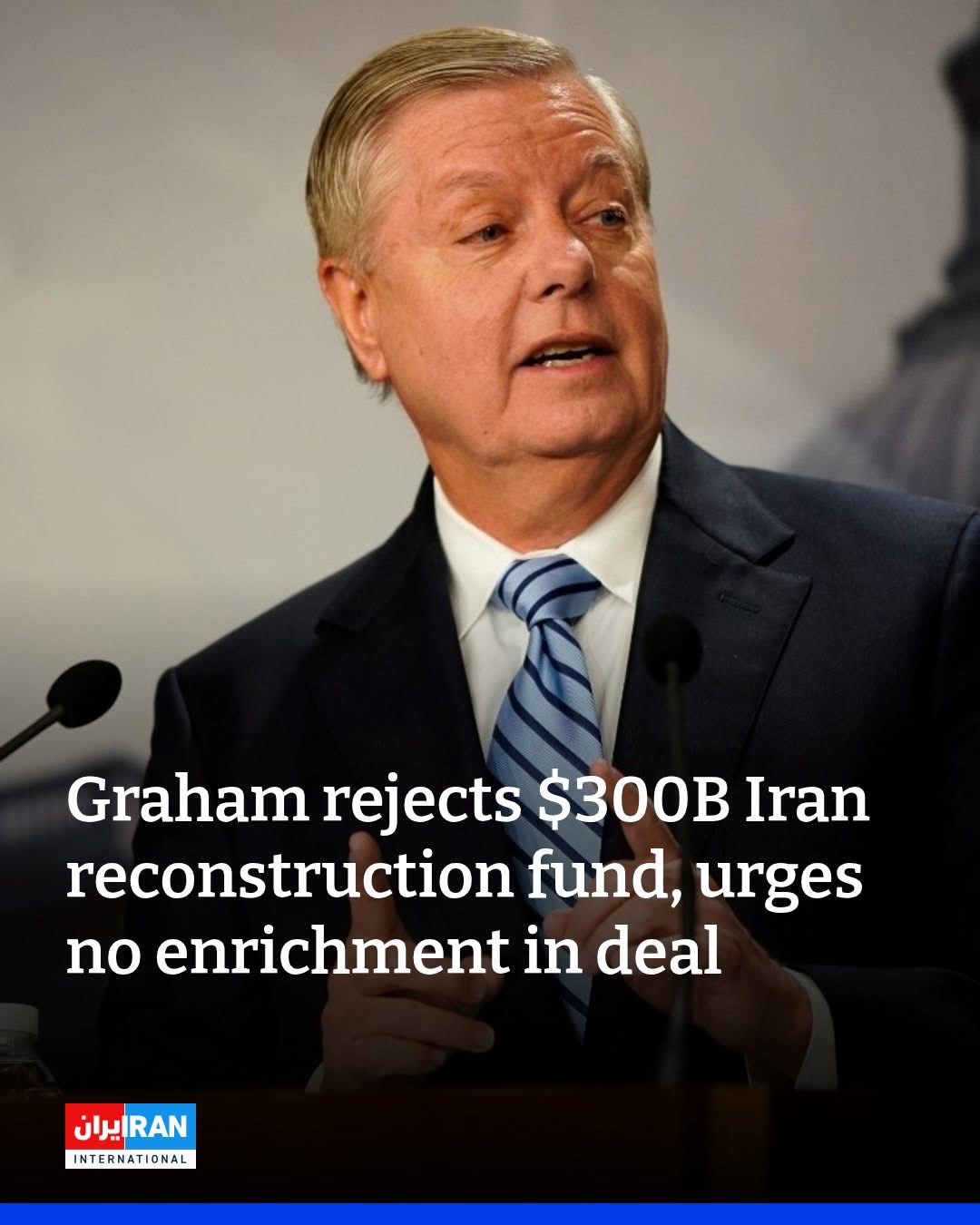
In a strongly worded post on X, Senator Graham argued that providing such a large sum to the Islamic Republic in its current state would be “tone deaf”. He drew a stark historical parallel, stating that a reconstruction fund for Iran would be “like offering a Marshall Plan to Germany with the Nazis still in charge”. “Any fund that would benefit the Iranian government in its current form wouldn’t be a good idea,” he added.
📝 The Iranian Draft MOU: A 14-Point Proposal
Graham’s criticism was a direct response to a report from Iran’s Mehr news agency, which published a draft of the memorandum of understanding (MOU) being discussed between Tehran and Washington. This 14-point draft includes several key provisions that starkly differ from the U.S. account of the talks:
· $300 Billion Reconstruction: The draft states that the U.S. and its allies would be required to present plans for rebuilding Iran, totaling at least $300 billion.
· Nuclear Enrichment: It insists on Iran’s right to enrich uranium, a point Tehran has repeatedly emphasized as a non-negotiable “red line”.
· Sanctions and Assets: It demands the release of $24 billion in frozen Iranian assets, a suspension of oil sanctions, and a complete lifting of the U.S. naval blockade.
· Sovereignty and Forces: It includes a U.S. commitment not to interfere in Iran’s internal affairs and to withdraw U.S. forces from areas surrounding the country.
· Exclusions: The draft explicitly excludes discussions on Iran’s missile program and its support for regional proxy groups.
President Trump has vehemently denied these terms, calling the Iranian media reports “fake news” and stating they have “no relation to the truth”. While Trump has claimed a deal is close, Iran’s foreign ministry maintains that “nothing has been finalized”.
📜 The Ghost of JCPOA: A Key Point of Contention
Graham’s warning is rooted in the legacy of the 2015 Joint Comprehensive Plan of Action (JCPOA), the nuclear deal from which the Trump administration withdrew in 2018. For critics like Graham, one of the JCPOA’s “major flaws” was that it allowed Iran to continue uranium enrichment under strict limits. The deal capped enrichment at 3.67% purity and limited Iran to 5,060 older-model centrifuges.
In contrast, President Trump has established a firm “red line” of “no uranium enrichment” in any new agreement. The current situation is more urgent because the International Atomic Energy Agency (IAEA) estimates Iran had built a stockpile of 440.9 kg of uranium enriched to 60% purity—just a short technical step from the 90% needed for weapons-grade material.
⚔️ The Context of ‘Maximum Pressure’
The negotiations are taking place amid extreme military and economic pressure. The U.S. has conducted a series of military strikes against Iranian targets and imposed a stringent naval blockade, which Trump claims is costing Tehran “$400–500 million a day”. The president has argued that this “maximum pressure” campaign forced Iran to the negotiating table. The situation has been highly volatile, with the U.S. canceling planned strikes at the last moment as diplomatic efforts intensified.
Senator Graham has praised Trump and the U.S. military for weakening Iran through this sustained pressure. However, he has also warned that any potential agreement must be “vastly different” from the 2015 nuclear deal and must definitively end Iran’s regional aggression and weapons ambitions.
Key Takeaway: The starkly different visions between Washington and Tehran for a potential peace deal, particularly the demand for $300 billion in reconstruction funds and the right to enrich uranium, remain the central hurdles. With both the White House and Iranian leadership offering contradictory accounts of the negotiations, and with a powerful U.S. senator like Lindsey Graham firmly opposing what he sees as a dangerous concession, the path to any final agreement remains highly uncertain.


