



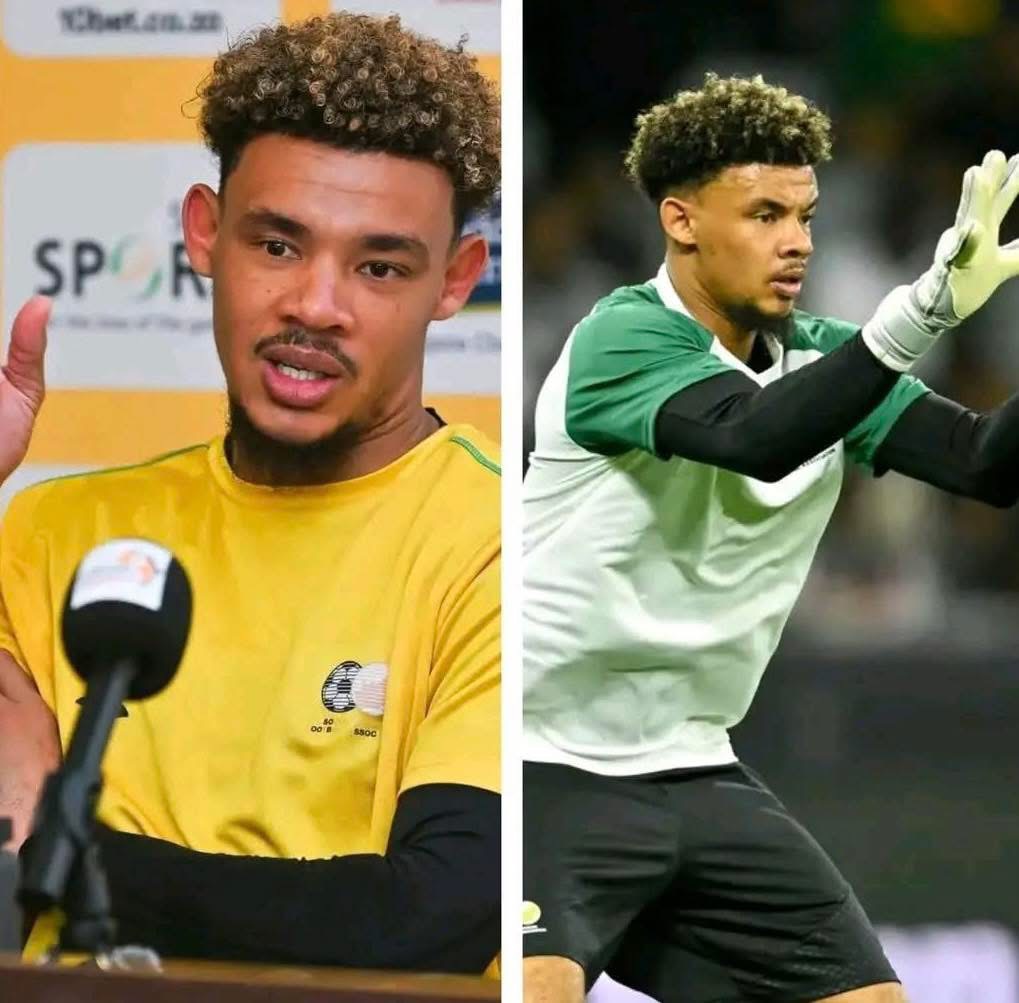
A deeply disappointed Ronwen Williams, captain and goalkeeper of South Africa’s Bafana Bafana, has made an impassioned plea for African unity after claiming his side received little to no support from fellow Africans during their 2-0 loss to co-hosts Mexico in the 2026 FIFA World Cup opener.
The 34-year-old shot-stopper, who has been widely praised for keeping the score respectable with a string of fine saves at the iconic Estadio Azteca, said the lack of continental backing stood in stark contrast to how Africans traditionally rally behind their representatives on the global stage.
“Africans have always supported other African countries in every World Cup tournament, but I can’t figure out why our own case is different,” Williams said in a post-match interview that has since gone viral across the continent.
“Many Africans supported Mexico, not us, the South Africans. We almost shed tears – truly, this is sad. As Africans, let’s stand for each other. Let’s stand together.”
‘Our loss seemed to bring happiness’
Williams’ emotional outburst came after a bruising encounter at the cavernous Azteca stadium, where Mexico’s early goal from Julián Quiñones (9th minute) and Raúl Jiménez’s header (67th minute) sank Bafana. The match also saw three red cards – two for South Africa (Sphephelo Sithole and Themba Zwane) and one for Mexico (César Montes) – as frustration boiled over.
But it was the reception from the stands and social media that cut deepest for the South African captain.
“I believe the lack of support from fellow Africans played a part in our defeat,” Williams said. “Instead of unity, our loss seemed to bring happiness to others, even within Africa. That was disappointing, because we expected our continent to stand with us in moments like this.”
The xenophobia factor
The painful backdrop to Williams’ lament was laid bare just hours before kick-off, when former Nigeria international John Mikel Obi – now a popular pundit – made a blunt, if tongue‑in‑cheek, remark.
“All Africans are supporting Mexico today! You know why? Because we want them [South Africa] to go home early to go and protect their jobs. If we support them, they will say we are taking their jobs,” Mikel said during a live broadcast, drawing laughter from fellow panellists.
The comment referenced the recurring waves of xenophobic violence in South Africa, which have periodically targeted immigrants from other African nations. In 2019, attacks on foreign nationals in Johannesburg and Pretoria led to diplomatic protests from Nigeria, Ethiopia, and several other countries. Nigeria’s government summoned South Africa’s ambassador and briefly withdrew from the Africa Economic Forum.
In 2022, South Africa’s own Human Rights Commission reported that xenophobia remained “deeply embedded” in parts of South African society, with foreign nationals routinely blamed for unemployment and crime.
A call from home that went unanswered
South African opposition leader Julius Malema had publicly called on the continent to rally behind Bafana Bafana ahead of the tournament.
“We must ask Africa to support us. South Africa has always supported Africa,” Malema said in a recent address. “When any other African country plays, Bafana Bafana is for that country.”
Yet on the pitch in Mexico City, and across social media in Accra, Lagos, Nairobi and Dakar, that support was conspicuously absent.
Record African representation, but not record unity
The 2026 World Cup features a historic 10 African nations – the most ever – including tournament debutants Cape Verde, Equatorial Guinea, and Burkina Faso. African football officials had hoped the expanded 48‑team format would foster unprecedented cross‑continental solidarity.
Instead, Williams’ words suggest a fracture that runs far deeper than football.
Who is Ronwen Williams? The man behind the plea
To understand the weight of Williams’ words, one must appreciate his journey.
Born on 21 January 1992 in Gelvandale, Gqeberha (formerly Port Elizabeth), Williams grew up in a neighbourhood scarred by gang violence. He has spoken openly about how football saved him from a life of crime. He made his Bafana Bafana debut against Brazil on 5 March 2014 and was appointed permanent captain by coach Hugo Broos in August 2021.
His career-defining moment came at the 2023 Africa Cup of Nations, where he saved an unprecedented four penalties in the quarter‑final shootout against Cape Verde – a tournament record. He was named AFCON’s Best Goalkeeper and later became the first South African ever nominated for the Yashin Trophy at the Ballon d’Or ceremony.
At club level, Williams has won multiple PSL Goalkeeper of the Season awards with Mamelodi Sundowns, who won the CAF Champions League just days before the World Cup began.
Bafana’s uphill battle
South Africa are appearing in only their fourth World Cup – their first since hosting the tournament in 2010. They have never advanced beyond the group stage:
· 1998 – Group stage, 2 points (third)
· 2002 – Group stage, 4 points (third, with a first‑ever win 1-0 vs Slovenia)
· 2010 – Group stage, 4 points (third, eliminated on goal difference despite beating France 2-1)
Coach Hugo Broos, the 74-year-old Belgian who plans to retire after this tournament, had described his squad as “fighters” and set a goal of reaching the knockout phase for the first time. After the Mexico defeat, that dream is on life support.
South Africa must now face the Czech Republic (19 June) and South Korea (25 June) – both formidable opponents – and likely need maximum points to progress to the round of 32 in the tournament’s new 48‑team format.
‘If people want us to perform, we need that support’
Williams insisted his comments were not an excuse but a plea for change.
“If people want us to perform, then we need to feel that support. We are human beings, not machines,” he said.
“I have always cheered for every African team at the World Cup – for Nigeria, for Ghana, for Senegal, for Cameroon. I never wanted them to lose. So why should it be different for us?”
The goalkeeper said the team “almost shed tears” upon realising the extent of the continental indifference.
“Truly, this is sad,” he repeated. “As Africans, let’s stand for each other. Let’s stand together.”
Reaction across the continent
Responses to Williams’ plea have been divided. Some African football fans expressed sympathy, while others pointed to years of frustration with South African attitudes.
“He has a point, but South Africa must first show that they respect fellow Africans at home,” wrote a Kenyan fan on X (formerly Twitter). “You can’t burn our people’s shops and then ask for our support.”
Others called for forgiveness and unity. “Sport is the one place we should put politics aside,” said a Nigerian football journalist. “Ronwen Williams is a gentleman. He deserves better.”
The Confederation of African Football (CAF) has not issued an official response, but a spokesperson told reporters that “CAF encourages all African nations to support each other on the global stage.”
What’s next
Williams and his teammates will fly to Atlanta for their second group match against the Czech Republic. Whether they will feel any warmer embrace from the continent remains to be seen.
But the South African captain has made one thing clear: he will keep speaking out.
“I’m not a hypocrite,” he said – echoing the words of Barcelona and Brazil star Raphinha from earlier this week. “I know what we face. But I also know what we can achieve if we stand together.”
*— Additional reporting by [News Desk Name] *


