



As scientists warn of “dangerous” conditions at the upcoming FIFA World Cup in the United States, England manager Thomas Tuchel is preparing a radical sideline strategy to protect his players from the sun.
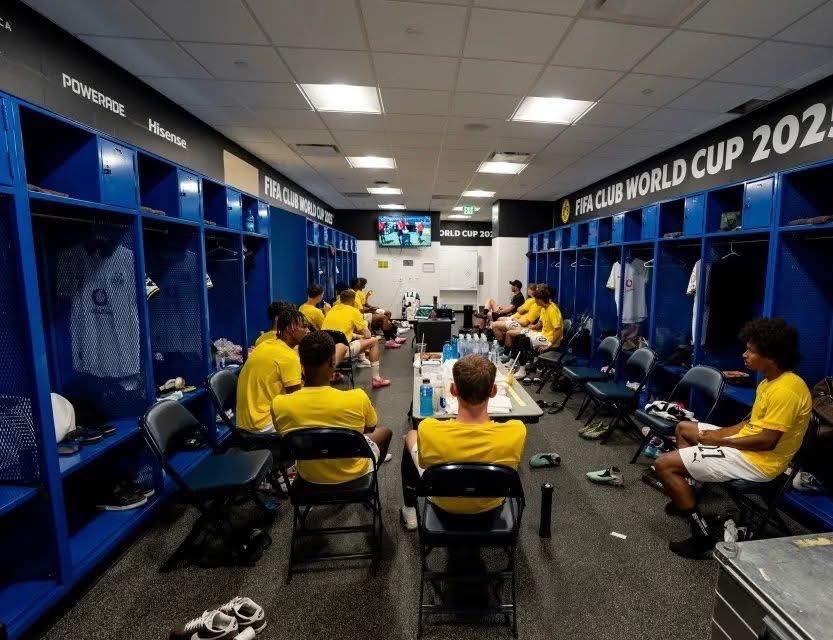
With the tournament set to kick off on June 11, concerns over extreme heat have prompted several national teams to consider keeping substitute players inside air-conditioned dressing rooms rather than sitting on the bench.
Under the proposed plan, the assistant manager would remain in the cooling shelter of the dressing room, acting as a “runner.” They would notify selected players when they are about to be brought onto the field, allowing them time to warm up before joining the action.
The Tuchel Blueprint
The proposal first gained traction last week when England manager Thomas Tuchel confirmed he was exploring the possibility due to the “very dangerous” risks posed by soaring temperatures.
“We know the individual reaction of the players to the heat and we have cooling strategies in place,” Tuchel told international media. “The heat is one of the challenges, but we are prepared.”
Tuchel is not alone. Multiple teams are looking at modifying the traditional bench setup to shield players from direct sunlight and humidity that could sap energy before they even step onto the pitch.
‘Inadequate’ Safety Measures
The move comes as a group of world-leading scientists accused FIFA of risking player safety. In an open letter published this week, international experts in health, climate, and sports performance warned that the governing body’s current heat guidelines are out of step with science and “impossible to justify.”
Researchers warn that 14 of the 16 stadiums being used across the United States, Canada, and Mexico could exceed dangerous levels of heat stress.
In parts of the southern US and northern Mexico, average daytime highs are in the low-to-mid 30Cs (86-95F), but can rise towards 40C (104F) during hotter spells. However, when humidity and sunshine are factored in using the “Wet Bulb Globe Temperature” (WBGT), players could face severe physical stress.
FIFPro, the global players’ union, considers a WBGT of 28C (equivalent to about 38C in dry heat) unsafe for play.
FIFA’s Response: Hydration Breaks for All
In response to the heat threat, FIFA has introduced mandatory three-minute “cooling breaks” in the 22nd and 67th minute of every single match, regardless of the weather.
“We are committed to protecting the health and safety of players,” a FIFA spokesperson said. Chief tournament officer Manolo Zubiria confirmed these would be “streamlined” stops from “whistle to whistle.”
Additionally, climate-controlled benches will be available for technical staff and substitutes at all outdoor matches.
However, scientists argue that three minutes is not enough. They are calling for breaks of at least six minutes and want matches delayed or postponed if the WBGT reading exceeds 28C.
A Tactical Game-Changer
While FIFA is focused on medical safety, the Tuchel plan highlights the tactical dimension of the heat. Keeping substitutes in the air-conditioned dressing room preserves their energy for the final third of the game.
Yet, it adds risk. A “runner” running down the tunnel creates a delay between the decision to substitute and the player’s arrival on the touchline, potentially reducing a team’s ability to react instantly to red cards or injuries.
Norway has already felt the heat. The Scandinavian side, featuring star striker Erling Haaland, was forced to alter training sessions in Greensboro, North Carolina, as temperatures approached 40C. Players reportedly removed shirts and socks during drills to cool down.
As the tournament draws closer, the sight of empty benches at the World Cup may become as common as the sight of fans fanning themselves in the stands. For Tuchel and his rivals, managing the temperature may be just as important as managing the tactics.
What is the Wet Bulb Globe Temperature?
Unlike standard temperature forecasts, WBGT measures heat stress in direct sunlight. It takes into account temperature, humidity, wind speed, and solar radiation. A reading of 28C is considered the “danger zone” for elite athletes, where heat stroke becomes a significant risk.


