



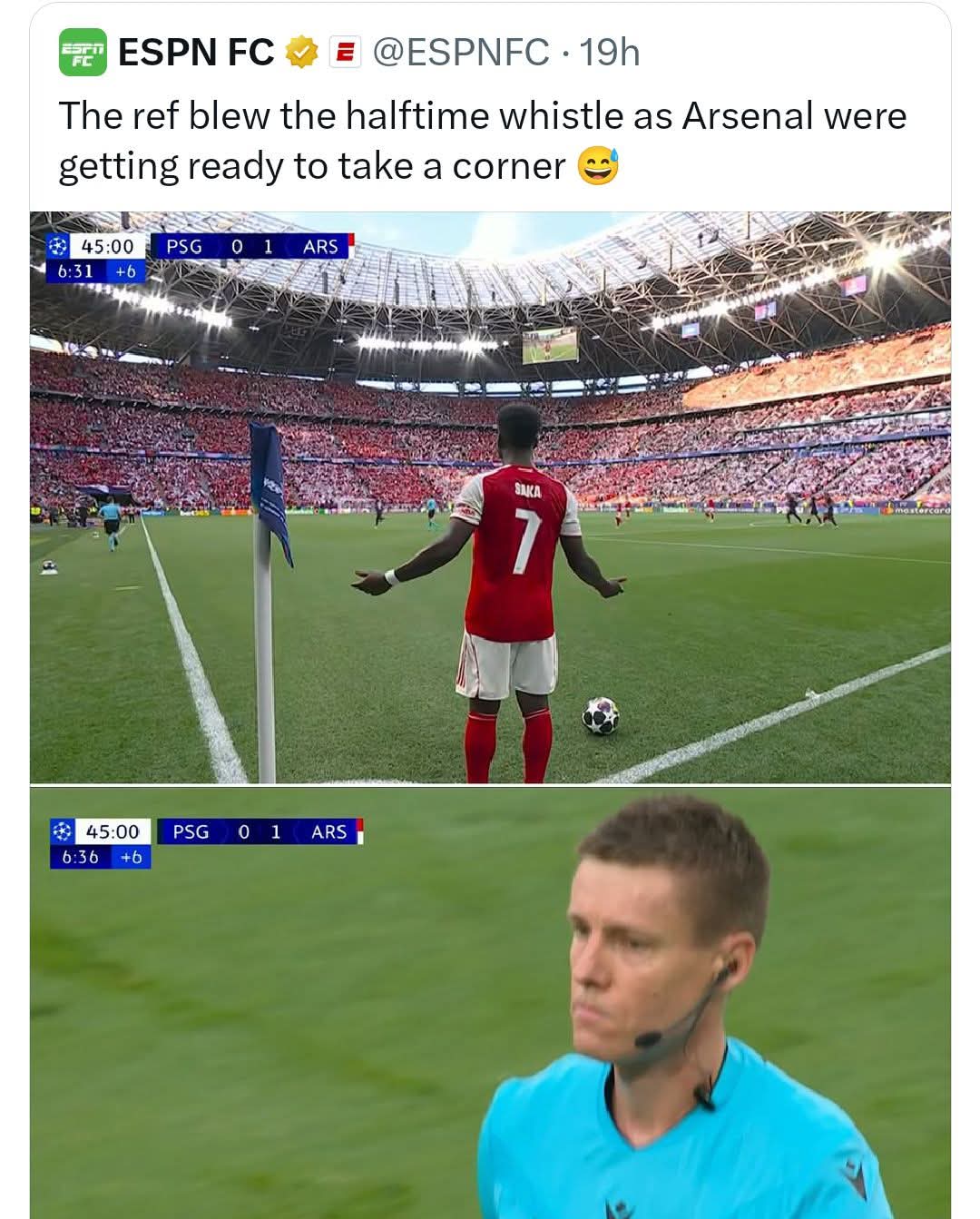
As stoppage time ebbed away in the first half, the script felt familiar. Bukayo Saka, Arsenal’s winger, collected the ball near the corner flag. With the clock ticking past the allotted additional minutes, he did what he always does: the slow, deliberate stroll. The gentle placement of the ball. The exaggerated step back. Each movement designed to squeeze every last second from the half.
But the referee did not flinch.
No arm waving. No lectures. No desperate pleas to “get on with it.” Just a calm, statuesque watch.
Saka finally placed the ball, retreated to his mark, and prepared to swing in a delivery that would kill the remaining time. He moved to take it—
Tweet.
The whistle blew. Half-time. Silence.
Then, a moment of pure theatre: the Arsenal players stood frozen, arms half-raised in incredulity, as if the laws of physics had suddenly betrayed them. The referee had simply applied the rules as written. No more. No less.
For a fanbase and a team who have mastered the art of stretching stoppage time in the Premier League—where six indicated minutes often become seven, eight, or nine—the enforcement felt like a sudden, cold injustice. In reality, it was elite game management.
The official earned full respect: no argument, no drama, just a perfectly timed whistle that reminded everyone who controls the clock.
Absolute cinema.


