



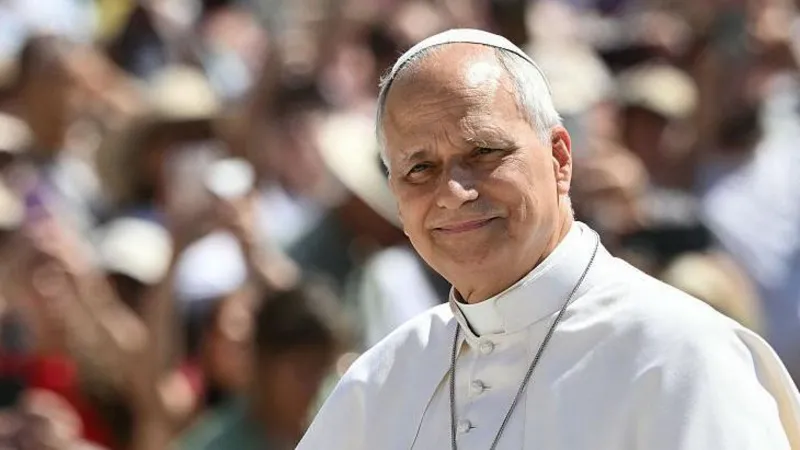
The Ghanaian government has officially welcomed Pope Leo XIV’s apology for the Catholic Church’s historical involvement in slavery, calling it “an act of moral courage” that advances global efforts toward justice and reconciliation.
The Pope issued the clearest apology to date from a pontiff for the Church’s role in legitimising slavery and its centuries-long delay in condemning the practice. The apology was published Monday in “Magnifica Humanitas” (“Magnificent Humanity”), the Pope’s first major teaching document, which also addressed the dangers of artificial intelligence.
“The Holy Father’s recognition of this painful past is an important step towards healing, reconciliation and a just society,” Ghana’s government said in a statement released late Tuesday.
The West African nation, which was a major hub for the transatlantic slave trade, has long led efforts seeking compensation and formal apologies from Western nations. Between the 16th and 19th centuries, an estimated 12 to 15 million Africans were shipped to the Americas, with roughly two million dying during the voyage.
In the papal encyclical – a letter traditionally addressed to Catholic bishops but now used to communicate with a global audience – Pope Leo wrote that it was “impossible not to feel deep sorrow when contemplating the immense suffering and humiliation endured by so many.”
The Pope acknowledged that Church authorities had at times responded to rulers’ requests by “regulating and legitimising forms of subjugation, including the enslavement of [non-Christians].” He also recognised that ecclesiastical institutions in the Middle Ages owned slaves.
“This constitutes a wound in Christian memory,” he said.
Ghana’s government said the apology reinforces “the growing global understanding that confronting historical injustices demands truth-telling and moral responsibility as essential foundations for justice and reconciliation.”
In March, Ghana successfully pushed through a United Nations resolution recognising the enslavement of Africans as “the gravest crime against humanity.” The country is due to host a conference in June to discuss next steps following the resolution’s adoption.
Human Rights Watch welcomed the Pope’s apology but cautioned that words alone are insufficient. Religious institutions, along with states and corporations that benefited from slavery, should “reckon seriously” with their histories and participate in reparative efforts, the rights group said.
The Pope, who completed an 11-day, four-nation tour of Africa in April – his first continental visit as pontiff – has previously denounced foreigners who exploit Africa’s wealth for profit. That tour included stops in Algeria, Cameroon, Angola and Equatorial Guinea.


