



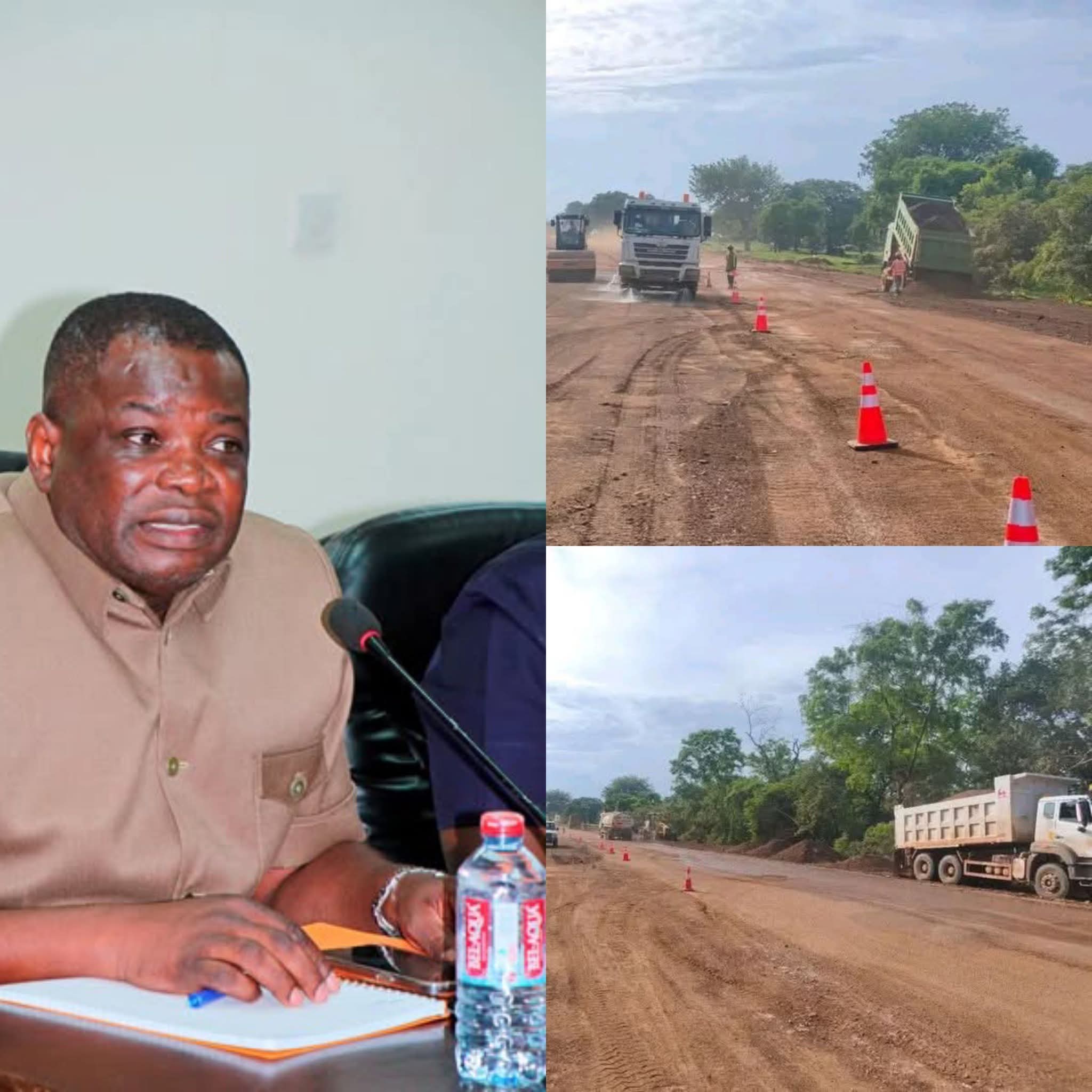
In what is rapidly becoming the most biting irony of President John Dramani Mahama’s ‘Big Push’ infrastructure agenda, the very local contractors Ghanaians demanded for years have turned the nation’s roads into ghost towns—and the public, once roaring for their hiring, has retreated into an awkward, deafening silence.
When the President cut the sod at Afienya in September 2025, he was fulfilling a long-standing national cry: “Give road contracts to local contractors.” The directive was explicit. Under the $10 billion Big Push programme, the state deliberately bypassed foreign giants to empower indigenous firms, believing they possessed “the same capacity as any foreign contractor”.
But nearly a year later, a nationwide inspection tour by Roads and Highways Minister Kwame Governs Agbodza has exposed a harrowing reality: many of these local champions are worse than the foreigners they replaced. They have abandoned sites, not because the treasury is empty, but because of pure, unadulterated negligence.
The ‘Agbodza Axe’ and the Trail of Shame
Minister Agbodza, embarking on unannounced site visits, has stumbled upon a trail of national disgrace that contradicts the patriotic narrative of local industry.
On the Techiman-Nkomsie-Sawla road, a local contractor had pocketed a staggering GH₵66.3 million in mobilisation fees. The Minister’s finding after five months? Not asphalt, not gravel—merely “surface clearing”.
At Maripoma Enterprise Limited, the minister issued a blunt ultimatum: achieve 20% progress immediately “or we terminate. We are not even coming back to negotiate”.
Perhaps the most egregious case involves JMC Projects, an Indian firm (one of the few foreign entities left) which allegedly fled with nearly $30 million after delivering zero percent work on a $158.6 million project. Yet, the spotlight remains on the locals: Volta Impex received approximately GH₵66 million but presented “fresh clearing” as evidence of progress. The Minister was not fooled. “This cannot be clearing that was done months ago,” he fumed.
The Hypocrisy of the Public Square
This brings us to the uncomfortable question of national hypocrisy.
For the better part of a decade, the Ghanaian public, civil society, and trade unions screamed xenophobia at foreign contractors. The narrative was simple: foreigners were stealing our bread, repatriating our profits, and taking jobs. The demand was unanimous—give it to Ghanaians.
President Mahama listened. At the launch of the Big Push, he proudly declared that a rigorous procedure had vetted these local firms for capacity.
Yet, the results are damning. It is not a lack of funds stalling the Enchi-Elubo road, where a contractor took mobilisation funds in December 2025 and did nothing. It is not a lack of policy stalling the Kejetia Phase II Market, where 150 workers were laid off due to stagnation. It is a crisis of work ethics.
Where is the Outrage?
The silence from the critics is now defeaning. The same social media activists who once trended hashtags demanding the expulsion of Chinese and Italian firms have gone quiet. The same Civil Society Organizations (CSOs) that protested “Brexit-style” takeovers are not holding press conferences to condemn the indigenous Ghanaian who took the money and ran.
The Ghanaian Times, reacting to similar negligence on the Agenda 111 hospital projects, noted that contractors received standard mobilisation funds but “no work was done,” calling it a “betrayal of trust”. But where is the public energy? Why do Ghanaians tolerate a local thief more than a foreign worker?
Minister Agbodza has put his finger on the pulse. “Why should the President suffer abuse because contractors are not doing the work?” he questioned, observing the viral criticism on TikTok. He has warned that “no contractor is bigger than government” and has ordered immediate terminations, including that of Black Oak on the Bogoso-Prestea road for citing a lack of “designs” as an excuse to stay home.
A Nation Reaps What It Sows
The administration is now scrambling to clean up the mess. Contractors are being summoned to dawn meetings and threatened with legal action. But the damage to the national psyche is done.
The “Local Contractor” policy was supposed to be the silver bullet that killed unemployment and poor infrastructure. Instead, it has revealed a hard truth: Ghana does not merely have a problem with foreign exploitation; Ghana has a problem with local accountability.
Until the public holds the local businessman to the same standard they held the foreigner—demanding value for money over jingoistic pride—the silence will be complicit. The roads will remain broken, and the hypocrisy will stand as the biggest obstacle to the nation we claim we want to build.


