



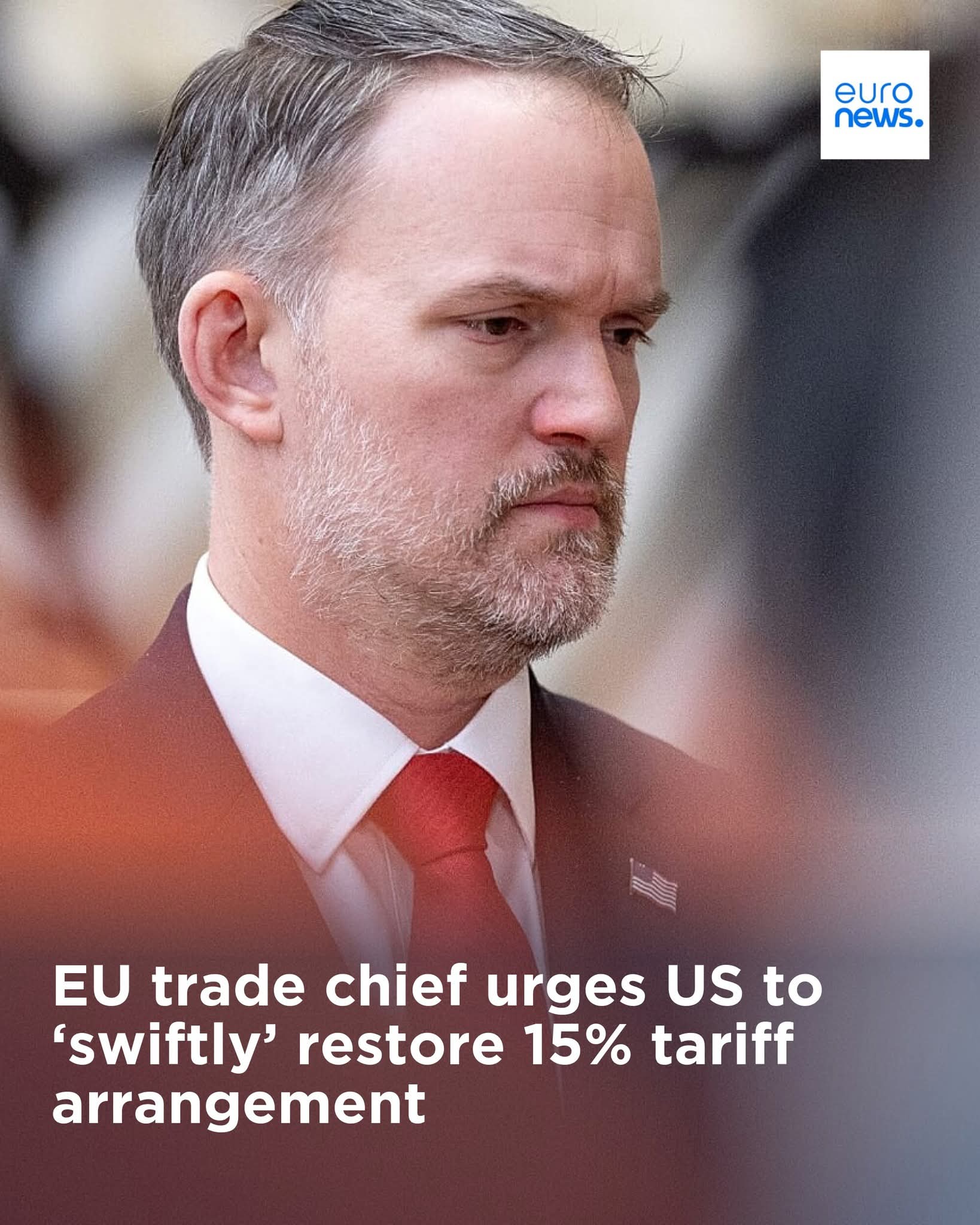
EU Trade Commissioner Maroš Šefčovič met with U.S. Trade Representative Jamieson Greer on Tuesday, kicking off a high-stakes week as Brussels barrels toward a tense internal battle over implementing the EU-US trade deal — with Washington demanding rapid tariff elimination on American goods.
The closed-door meeting between the two top trade officials preceded what diplomats describe as an unpredictable round of negotiations between EU member states and the European Parliament. At the heart of the looming clash: how quickly Brussels should scrap tariffs on a range of U.S. industrial and agricultural products.
The Trump administration is pressing the EU for a swift, legally binding timeline to eliminate duties on American steel, aluminum, and certain foodstuffs, according to sources familiar with the discussions. In return, Washington has signaled it would roll back some of its own “Section 232” national security tariffs — a long-standing grievance for European capitals.
But back in Brussels, unity is fraying.
Export-heavy member states, led by Germany, are pushing for a fast-track deal to reduce transatlantic friction and secure U.S. market access. France, however, alongside several other countries and the European Parliament, is demanding stronger safeguards for European farmers and strategic industries. Lawmakers fear a rushed agreement could undermine EU environmental and food safety standards.
“The commission is walking a tightrope,” a senior EU official told reporters, speaking on condition of anonymity. “Washington wants speed and predictability. But the Parliament wants concrete protections before signing off on anything.”
Šefčovič — who has made rebuilding transatlantic trust a priority — described his meeting with Greer as “constructive and forward-looking.” Yet his real challenge lies ahead: selling any deal to a deeply skeptical European Parliament, which holds veto power over the final agreement.
MEPs have already warned they will not rubber-stamp an accord that weakens European standards or lacks reciprocal commitments from the U.S. on tariffs for European cars, cheese, and wine.
“If Washington thinks it can dictate terms to 27 member states and an elected parliament, it’s mistaken,” a senior parliamentary aide said. “This isn’t a simple tariff swap — it’s about the EU’s regulatory sovereignty.”
The coming weeks are expected to bring intense negotiations, with Šefčovič caught between U.S. pressure and rising domestic resistance. A failure to forge a unified EU position could unravel the fragile détente — and rekindle a transatlantic trade war just as global economic uncertainty deepens.
Neither the European Commission nor the U.S. Trade Representative’s office immediately commented on specific outcomes of the Šefčovič-Greer meeting. The next round of EU-internal talks is scheduled for early next week.


