



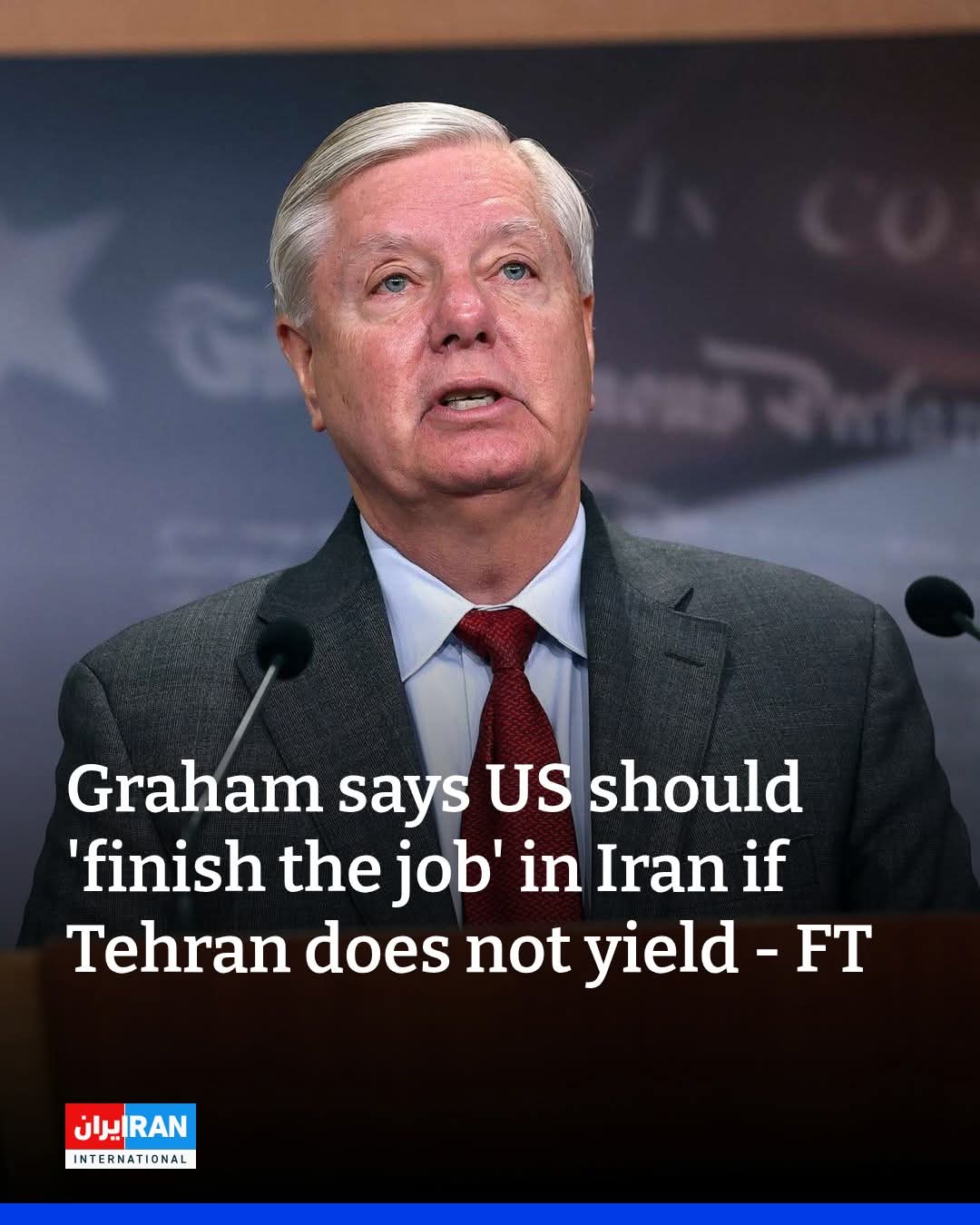
Republican Senator Lindsey Graham has urged President Donald Trump to “finish the job” against Iran and resume military action if Tehran persists in what he called “provocative” behavior, warning that the United States must not allow the Islamic Republic to “blackmail the world.”
Speaking to the Financial Times, Graham said Washington should “open up the strait” and use “whatever combination of events is necessary to start the flow” of shipping through the strategic waterway, which has been largely closed for over two months.
“Between the blockade, which has been brilliantly executed, and letting Iran know that Kharg Island is in play, hopefully that will create some deterrence,” Graham said, referring to Iran’s main oil export hub on Kharg Island, which handles roughly 90 percent of the country’s crude exports.
“If it doesn’t, (we need to) just stand up to Iran, don’t let them get away with blackmailing the world.”
The South Carolina senator’s call comes as the Trump administration continues its “maximum pressure” campaign against Tehran. On April 13, the U.S. Navy imposed a full naval blockade covering the entirety of the Iranian coastline. According to U.S. Central Command, 44 commercial vessels have already been turned around or denied passage in recent days.
Military options on the table
U.S. Central Command has briefed President Trump on a range of military options, including a “short and powerful” wave of strikes on Iranian infrastructure and a second plan focused on seizing part of the Strait of Hormuz, which may involve deploying ground forces. A third option reportedly under discussion would send special forces to secure Iran’s stockpile of highly enriched uranium, which the administration says could be used to develop a nuclear weapon.
President Trump confirmed on Wednesday that the naval blockade has proven “somewhat more effective than the bombing,” but he has left open the possibility of military action if Iran refuses to negotiate.
Tehran warns of ‘painful retaliation’
Iran has responded with a series of increasingly forceful warnings. On Thursday, Aerospace Force Commander Majid Mousavi said any new U.S. attack would be met with “long and painful strikes” on American positions across the region. “We’ve seen what happened to your regional bases, and we will see the same thing happen to your warships,” he told local media.
Mahmoud Nabavian, a member of Iran’s national security and foreign policy committee, warned that “none of the kings of the Arab countries or their palaces in the region will remain safe” if U.S. strikes resume. An Iranian lawmaker also threatened that any “covetous eye” on Kharg Island would turn the island into a “graveyard for aggressors”.
Blockade bites; diplomacy stalls
The conflict originated with joint Israeli-U.S. strikes launched on February 28, 2026, which have killed an estimated 1,300 people, including then-Supreme Leader Ayatollah Ali Khamenei. The strikes also targeted energy infrastructure across several Gulf states, causing global energy prices to spike, with Brent crude trading near $100 per barrel.
Despite a fragile ceasefire brokered by Pakistan on April 8, subsequent talks in Islamabad have failed to produce a breakthrough. According to reports, President Trump rejected an Iranian offer to reopen the Strait of Hormuz in exchange for an end to the blockade and a postponement of nuclear talks, telling Axios, “They want to settle, but I don’t want them to have a nuclear weapon”.
For now, the standoff continues, with Graham insisting that only sustained military pressure will force Tehran to back down. “Right now the Iranians are losing capability at a faster rate than we assumed,” he said last mont. “The Iranian regime is on its knees, and we’re not stopping.”


