



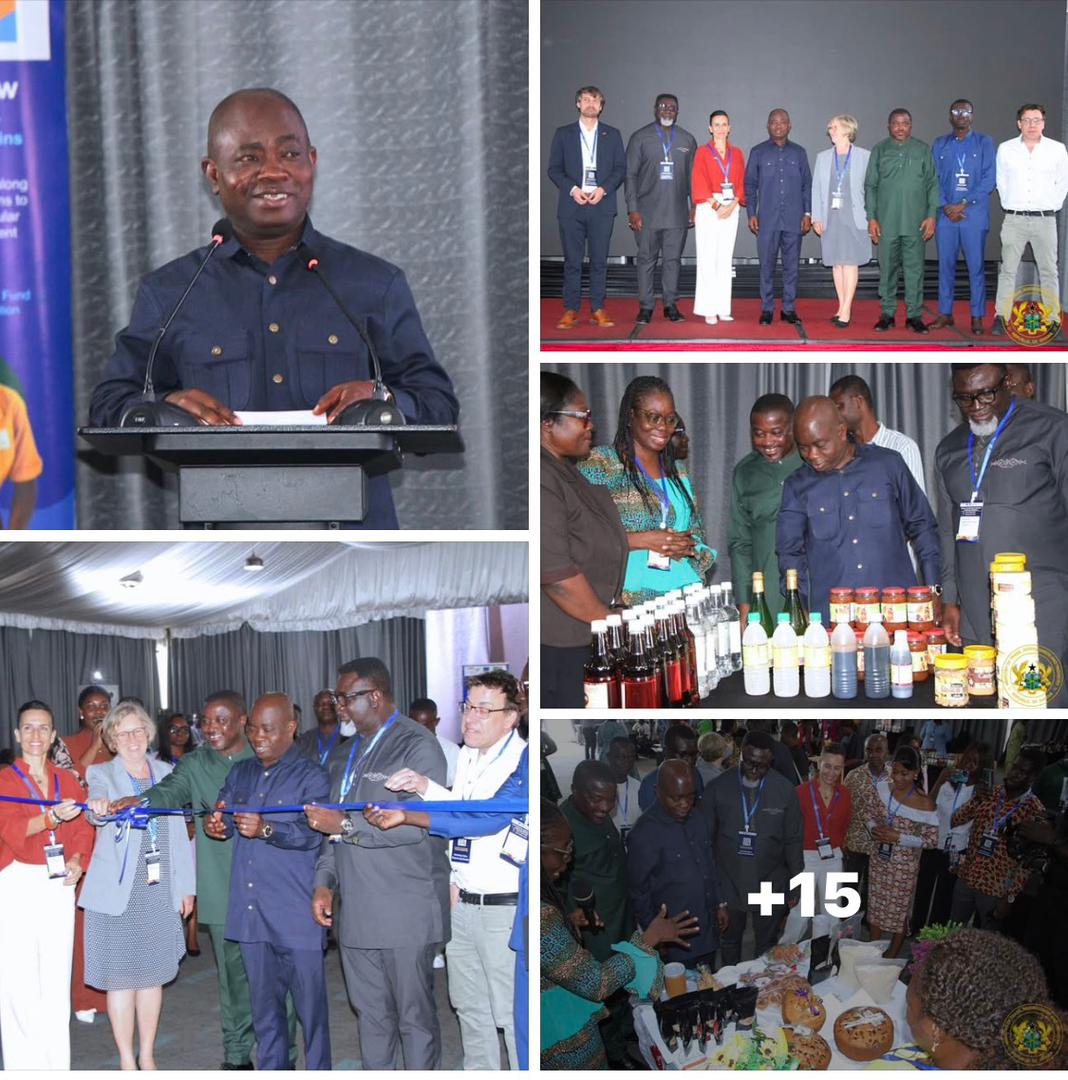
Ghana is setting its sights on a long‑ignored farm by‑product — the cashew apple — as a catalyst for a new wave of agro‑industrial growth, government officials declared Wednesday at a major industry conference in Accra.
For years, the juicy, nutrient‑rich cashew apple has rotted on farms while the country’s attention remained fixed on the lucrative cashew nut. But at the Regional Cashew Apple Valorization Conference and Exhibition, Deputy Minister for Trade, Agribusiness and Industry, Hon. Sampson Ahi, announced a strategic shift: Ghana will now aggressively process the apple into juices, concentrates, animal feed, cosmetics, and other industrial products.
Speaking on behalf of the sector minister, Hon. Lawyer Elizabeth Ofosu‑Adjare, Deputy Minister Ahi stressed that the era of relying on raw cashew nut exports is over. “We must build a robust, integrated value chain that prioritises local processing, branding, and access to competitive markets,” he told an audience of policymakers, investors, and development partners.
The conference, organised by Deutsche Gesellschaft für Internationale Zusammenarbeit (GIZ) in collaboration with the Ghana Tree Crop Development Authority and supported by the European Union, brought together key stakeholders who shared a unified vision: to unlock the full economic potential of Ghana’s cashew sector.
Currently, Ghana processes only a tiny fraction of its cashew output locally. The government’s renewed focus on “valorisation” — turning agricultural waste into wealth — is expected to create jobs, keep more value within the country, and accelerate industrial growth under the Feed the Industry Programme, which seeks to link farmers directly to processors with reliable supply and market access.
“This is no longer a discussion about waste,” an industry participant noted on the sidelines. “It’s about a second harvest — one that can double farmer incomes.”
As the two‑day conference continues, stakeholders are expected to produce concrete action plans to scale cashew apple processing into commercially viable ventures, positioning Ghana as a leader in sustainable agro‑industrial development across West Africa.


