



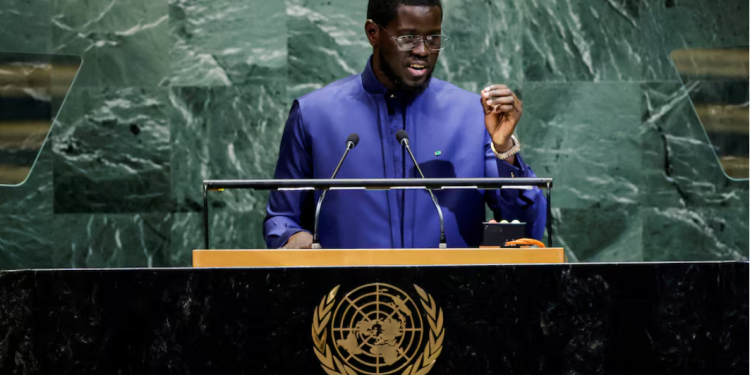
President Bassirou Diomaye Faye has signed legislation that doubles the maximum prison sentence for same-sex relations in Senegal, increasing the penalty from five to ten years, according to the official journal published Tuesday.
The new law, signed Monday, also introduces criminal penalties for individuals found guilty of promoting or financing same-sex relationships, with sentences ranging from three to seven years in prison.
The legislation, which passed the National Assembly on March 11 by a vote of 135 in favor with zero opposed and three abstentions, maintains the classification of same-sex relations as a misdemeanour despite pre-election promises from Prime Minister Ousmane Sonko to elevate it to a felony.
Under the revised law, “acts against nature”—the legal terminology referring to same-sex relations—carry sentences of five to ten years, up from the previous penalty of one to five years. Financial penalties have also increased substantially, with fines ranging from two million to ten million CFA francs ($3,500 to $17,600), compared to 100,000 to 1.5 million CFA francs previously.
Maximum sentences apply when the act involves a minor.
Arrests Surge Since February
Dozens of men have been arrested under existing anti-LGBTQ laws since February, when police detained twelve men, including two local celebrities, in what media reports describe as the beginning of a wave of detentions. Arrests frequently occur based on accusations and mobile phone searches, with names of those detained made public.
The new legislation additionally penalises anyone who accuses another person of same-sex offences “without proof.”
International and Local Reactions
United Nations Human Rights Chief Volker Türk called the law “deeply worrying” following its parliamentary approval, stating that it “flies in the face of the sacrosanct human rights.”
LGBTQ rights organisation ILGA World had urged President Faye to reject the bill, appealing for “respect for individual liberty and the human person.”
In Senegal, a Muslim-majority West African nation, LGBTQ issues have long stirred controversy. Religious associations have staged demonstrations demanding tougher penalties, and gay rights advocacy is frequently characterised by opponents as a foreign imposition of Western values.
Prime Minister Sonko, who presented the legislation to parliament, had promised prior to taking office in 2024 to make same-sex relations a crime with harsher penalties.


