



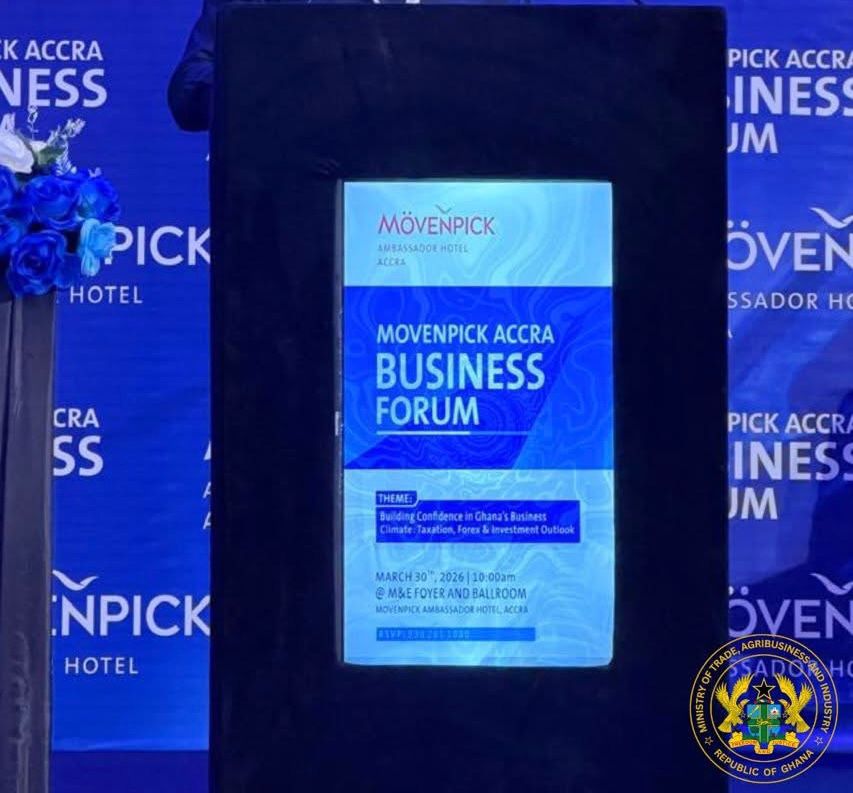
A high-level stakeholder forum convened in Accra on Monday, bringing together policymakers, private sector leaders, and development partners to reinforce trust in Ghana’s economic trajectory and foster a more predictable business environment.
Themed “Building Confidence in Ghana’s Business Climate: Taxation, Forex & Investment Outlook,” the gathering served as a platform for candid dialogue on the factors shaping investment and growth. Discussions centered on the need for policy clarity, macroeconomic stability, and transparent frameworks to support business operations.
Deputy Minister for Finance, Hon. Thomas Nyarko Ampem, reaffirmed the government’s commitment to restoring macroeconomic stability. He highlighted ongoing efforts to curb inflation, stabilize the cedi, and enforce fiscal discipline—measures he described as essential to creating a dependable environment where businesses can plan and invest with confidence.
From an investment standpoint, Ghana Investment Promotion Centre (GIPC) Chief Executive Officer, Mr. Simon Madjie, expressed optimism about the country’s prospects. He pointed to opportunities in agribusiness, manufacturing, and services, while emphasizing that policy consistency and transparency remain key to attracting and retaining investment. He also called for stronger partnerships between local enterprises and international investors.
Speaking on behalf of the Minister for Trade, Agribusiness and Industry, Hon. Sampson Ahi acknowledged the challenges posed by economic uncertainties, despite strong business appetite for expansion. He outlined the Ministry’s focus on improving trade systems, boosting local production, and addressing operational bottlenecks. He also stressed the importance of efficient trade processes in helping Ghanaian businesses maximize opportunities under the African Continental Free Trade Area (AfCFTA).
The Registrar of Companies, Maame Samma Peprah, underscored the role of transparency and strong institutions in building trust. She cited ongoing reforms—including the Beneficial Ownership Register and the Bulk Search Platform—as key to enhancing corporate accountability, noting that businesses prioritizing transparency and compliance are better positioned to attract investment and secure financing.
Contributions from the Bank of Ghana and other institutions enriched discussions on monetary policy, foreign exchange management, and access to finance.
The forum concluded with a shared commitment to sustained collaboration between government and the private sector, aimed at building a stable, transparent, and predictable business environment—one capable of driving growth, attracting investment, and unlocking Ghana’s full economic potential.


