



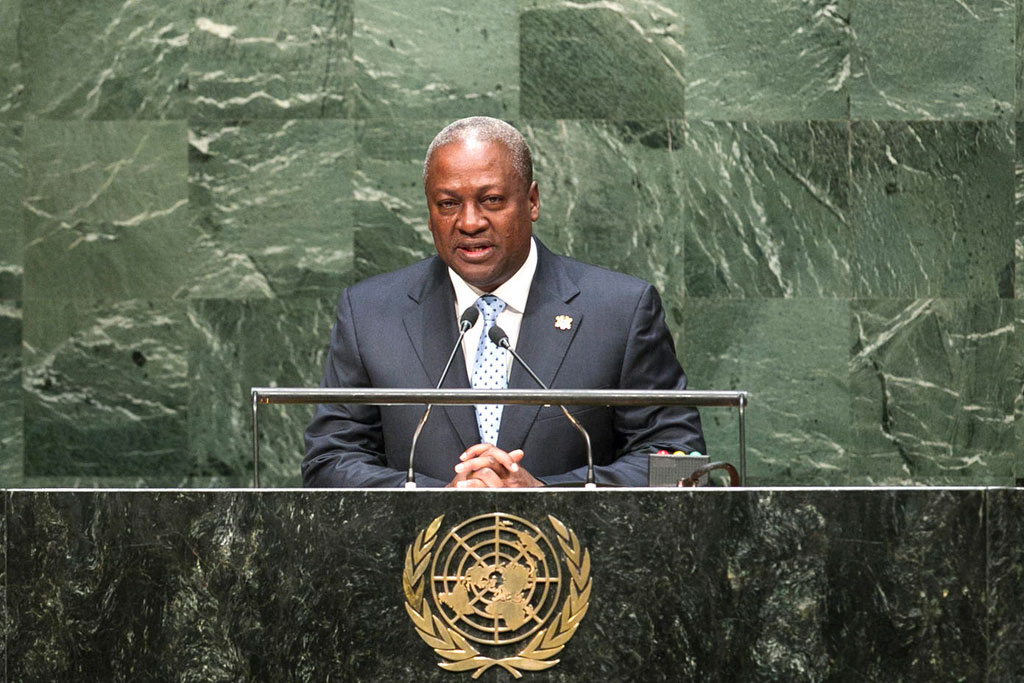
Ghana is set to table a landmark resolution at the United Nations General Assembly this month, formally calling for the recognition of the transatlantic slave trade as a crime against humanity and initiating a process of repair.
The announcement was made by President John Dramani Mahama in an opinion piece published on March 23, 2026, coinciding with the period following Ghana’s 69th independence anniversary celebrations. Invoking the legacy of the nation’s first president, Kwame Nkrumah, President Mahama emphasized that political independence remains incomplete without addressing the global systems shaped by historical injustices.
The initiative, according to the President, is not solely Ghana’s but enjoys the backing of the African Union (AU), the Caribbean Community (CARICOM), and a growing coalition of nations across the global south.
“Together we seek not to reopen old wounds but to acknowledge them honestly, and to work collectively toward healing and justice in ways that strengthen our shared future,” President Mahama wrote.
The proposed resolution builds upon decades of advocacy and institutional frameworks, including the 1993 Abuja Proclamation, the comprehensive reparatory justice framework established by CARICOM, and the 2023 Accra Proclamation. It also aligns with the AU’s declaration of 2026 to 2035 as the ‘Decade of Action on Reparations and African Heritage.’
President Mahama clarified that the move is not about assigning collective guilt to present generations but about understanding how historical injustices have shaped contemporary inequalities.
“Africa brings to this conversation a perspective shaped by its own intellectual and moral traditions – one that holds that injustice does not simply fade with time, but requires deliberate effort to address and redress,” he stated.
While acknowledging previous steps by the international community, such as the 2001 Durban Declaration which recognized the trade as a crime against humanity, the President argued that more remains to be done to translate that recognition into meaningful dialogue and practical pathways for repair.
The resolution is expected to be formally introduced at the UN General Assembly later this month.


