



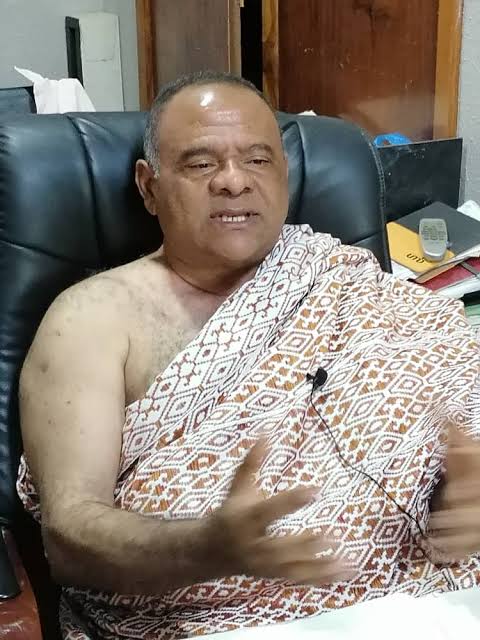
The Twafohene of the Techiman Traditional Area, Nana Afena Nketia II, has rejected assertions that traditional African festivals are rooted in idolatry, urging the youth to actively engage in cultural celebrations to safeguard their heritage.
Speaking to the media ahead of the climax of the 2026 Techiman Appor Festival, scheduled for Friday, March 27, 2026, the chief emphasized that such claims stem from a fundamental misunderstanding of culture and tradition. He called on residents, particularly young people, to participate in the ongoing festivities to deepen their knowledge of local customs.
“Since the beginning of time, every country and society has had its own way of doing things. That is what we call culture, and it is what makes each people unique,” Nana Afena Nketia II stated. He noted that in Ghana and across Africa, culture dictates respect for traditional priests, who serve essential roles in governance and spiritual guidance alongside chiefs.
The Twafohene argued that the involvement of traditional priests in festivals should not be misconstrued as worship of idols. He stressed that the advent of Christianity and Islam does not necessitate the abandonment of indigenous customs.
“Our traditional priests work together with our chiefs in the governance of our communities. The introduction of Christianity and Islam does not mean we should abandon our traditions and culture by sidelining our traditional priests,” he explained. “Therefore, the participation of traditional priests in cultural activities does not amount to idolatry.”
He pointed to other continents, such as Asia and Europe, where cultural traditions are preserved without being labeled as idolatrous. “There is no justification for us to undermine our festivals, culture, and traditions simply because traditional priests play important roles in ensuring their success,” he added.
The Appor Festival is an annual celebration of the Bono people, centered on promoting unity, accountability, and societal purification. Historically, it serves as a platform for individuals to express grievances, critique leadership, and address social wrongs without fear. In contemporary times, the festival is widely regarded as a form of grassroots democracy, upholding principles of freedom of expression, transparency, and community participation.


