



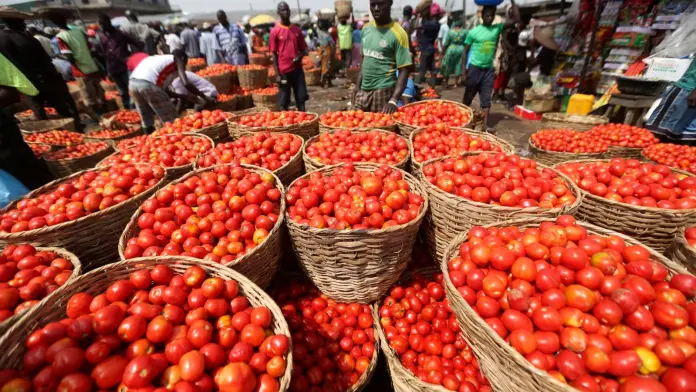
The Chamber of Agribusiness Ghana (CAG) has launched a comprehensive 12-month implementation plan aimed at achieving year-round tomato sufficiency, a move accelerated by Burkina Faso’s recent ban on fresh tomato exports.
The roadmap, which forms the core of a proposed National Tomato Emergency Strategy, is designed as a time-bound intervention to transition Ghana from a heavy reliance on imports to a resilient, locally-driven production system within a single year.
The strategy is structured into seven sequential phases, each with defined timelines, deliverables, and accountability measures.
Establishment Phase (Days 1–30)
The initial phase focuses on creating the legal and financial framework. This includes a Presidential declaration of the emergency, the formation of an inter-ministerial coordination committee, and the allocation of GH¢ 430 million in the 2026 Supplementary Budget. The period will also see the establishment of the Grow Ghana Agro-Corporate Partnership Framework (GGACPF) Secretariat, with the Ghana Investment Promotion Centre leading investor mobilization.
Assessment Phase (Days 31–60)
The next 30 days are dedicated to technical assessments of major irrigation schemes, including Tono, Vea, and Pwalugu, alongside evaluations of key tomato processing plants in Pwalugu, Wenchi, and Techiman. The Chamber also aims to enroll 50,000 farmers into cooperatives, secure at least 15 anchor corporate investors, and finalize a revised tariff regime for tomato paste.
Mobilisation Phase (Months 3–4)
Full-scale mobilization is set to commence by the third and fourth months. This phase will see the start of irrigation rehabilitation works and the deployment of 15,000 hectares of drip irrigation systems. Farmers will receive certified seeds and fertilizer packages, contractors will be appointed to rehabilitate processing plants, and financial institutions will roll out credit support schemes.
First Harvest Phase (Months 5–6)
The strategy anticipates its first major results within six months, with irrigated dry-season crops reaching harvest. At least 20 aggregation and cooling centers are expected to become operational, and processing plants will be halfway through rehabilitation. This phase is projected to deliver an additional 80,000 to 120,000 metric tonnes of tomatoes, with buffer stock systems activated to stabilize supply.
Processing Phase (Months 7–8)
By the seventh and eighth months, rehabilitated processing plants are expected to begin producing Ghana-made tomato paste for the domestic market. Cold chain systems linking Tamale to Accra and Techiman to Kumasi will be fully operational to ensure efficient distribution.
Scale-Up Phase (Months 9–10)
The focus then shifts to expansion, with the goal of securing international development financing from institutions such as IFAD and the African Development Bank. The plan includes establishing three Tomato Agro-Industrial Zones and scaling up private sector participation to 200 corporate partners, aiming for an annual production trajectory of 300,000 metric tonnes.
Sufficiency Phase (Months 11–12)
By the conclusion of the 12-month period, the Chamber projects that Ghana will achieve full tomato sufficiency with year-round supply across major markets. Annual production is targeted to exceed 800,000 metric tonnes, potentially reducing processed tomato paste imports by up to 40 percent. A strategic buffer stock system is also planned to prevent future supply shocks.
In a statement, the Chamber described the roadmap as both urgent and achievable, framing the Burkina Faso export ban as a critical opportunity to reset the nation’s agricultural priorities.
“This is not a long-term aspiration; it is a 12-month mission,” the CAG emphasized, noting that effective coordination between the government and private sector would be essential to building a resilient tomato value chain capable of sustaining national demand.
The roadmap is expected to serve as a guiding framework for immediate policy decisions and investment actions as the country seeks to transform a regional supply disruption into a catalyst for agricultural transformation.


