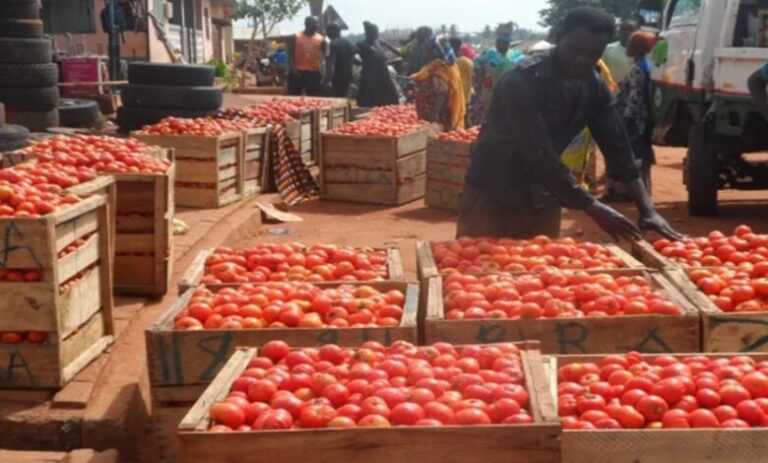
Burkina Faso’s military-led government has announced an immediate suspension of all fresh tomato exports across the country, in a decisive move to protect domestic processing industries from supply shortages.
The ban, effective from March 16, 2026, was jointly announced by the Minister of Industry, Commerce and Artisanat, Serge Gnaniodem Poda, and the Minister of State for Agriculture, Water, Animal and Fisheries Resources, Commandant Ismaël Sombié.
According to a joint communiqué released by the two ministries, the measure applies nationwide “until further notice” and targets all economic operators engaged in the fresh tomato trade. The government cited the urgent need to guarantee sufficient supplies to Burkina Faso’s national tomato processing units as the primary motivation for the export restriction.
The suspension also extends to Special Export Authorisations (ASE), which have been halted with immediate effect. However, operators holding valid tomato export permits have been granted a two-week grace period from the date of the communiqué to finalise any ongoing export transactions. Following this deadline, all existing authorisations will be rendered null and void.
Authorities have warned that any breach of the directive will result in sanctions under existing regulations. Goods confiscated for violating the ban will be handed over free of charge to industrial tomato processing establishments operating under the country’s popular shareholding framework.
The latest policy reflects Burkina Faso’s growing emphasis on developing its agro-processing sector as part of a broader strategy to reduce dependence on raw commodity exports—an approach that has gained momentum under the transitional administration of Captain Ibrahim Traoré.
Industry observers note that the ban is likely to disrupt cross-border tomato trade within the West African sub-region, particularly affecting neighbouring Ghana, which shares significant economic and agricultural ties with Burkina Faso. Northern Ghana, which depends heavily on cross-border agricultural flows, could experience local market price fluctuations as supply patterns adjust.
The government has called for the cooperation of all stakeholders in the tomato value chain, including border control services and security forces, to ensure full compliance with the directive.
The development comes amid reports of tensions along the Burkina-Ghana corridor, following recent attacks on Ghanaian egg traders in Burkina Faso, highlighting broader challenges facing cross-border agricultural trade in the region.