



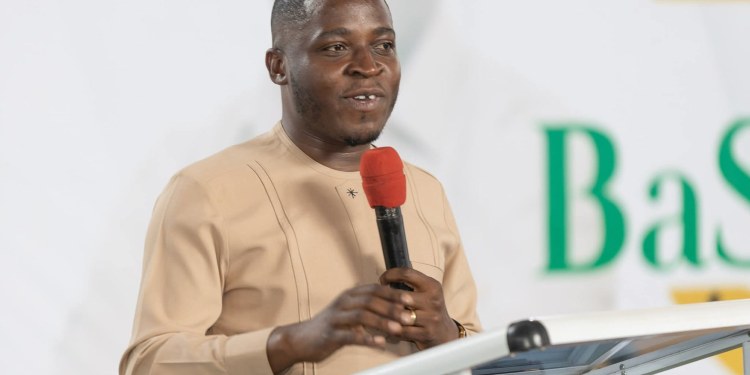
The debate over the use of public funds for the 2026 FIFA World Cup has been ignited by the Member of Parliament for Ketu North, Eric Edem Agbana, who is urging the government to prioritize infrastructure over sending supporters to the tournament.
In a strong statement on Accra-based Citi FM, Hon. Agbana argued that spending millions of cedis to transport fans to the global showpiece in 2026 would be an irresponsible use of state resources. He insists that such funds would be better allocated to constructing and renovating sports facilities across the country.
“It won’t make sense spending tax revenue on supporters when the infrastructure is crying for attention,” the lawmaker stated.
He broke down the significant costs involved, noting that supporting even a modest contingent comes with a heavy price tag. According to his estimates, sending a single supporter for the group stage—covering flights, match tickets, accommodation, and allowances—could cost approximately $9,000.
“With about 2,000 supporters, the government could spend approximately $18 million,” Agbana calculated.
To put the expenditure into perspective for his constituents, he issued a direct challenge regarding the opportunity cost. “If you ask me to bring even 10 people from Ketu North to the World Cup and you will spend close to $90,000, I will tell you: please use that to construct an AstroTurf or a sports complex for me in Ketu North.”
The MP clarified that his objection is specifically to the use of public funds, which he believes should be focused on long-term development for the benefit of all Ghanaians. He stated that he would have no issue with sending fans to the World Cup if the initiative were fully funded by private-sector partners and sponsors.
His comments have reignited a familiar conversation in Ghanaian football circles, where the practice of the government and the Ghana Football Association (GFA) financing large supporter delegations to major tournaments has often been scrutinized. As the nation looks ahead to the 2026 World Cup, Agbana’s remarks add a significant voice to the call for fiscal prudence and investment in grassroots development.


