



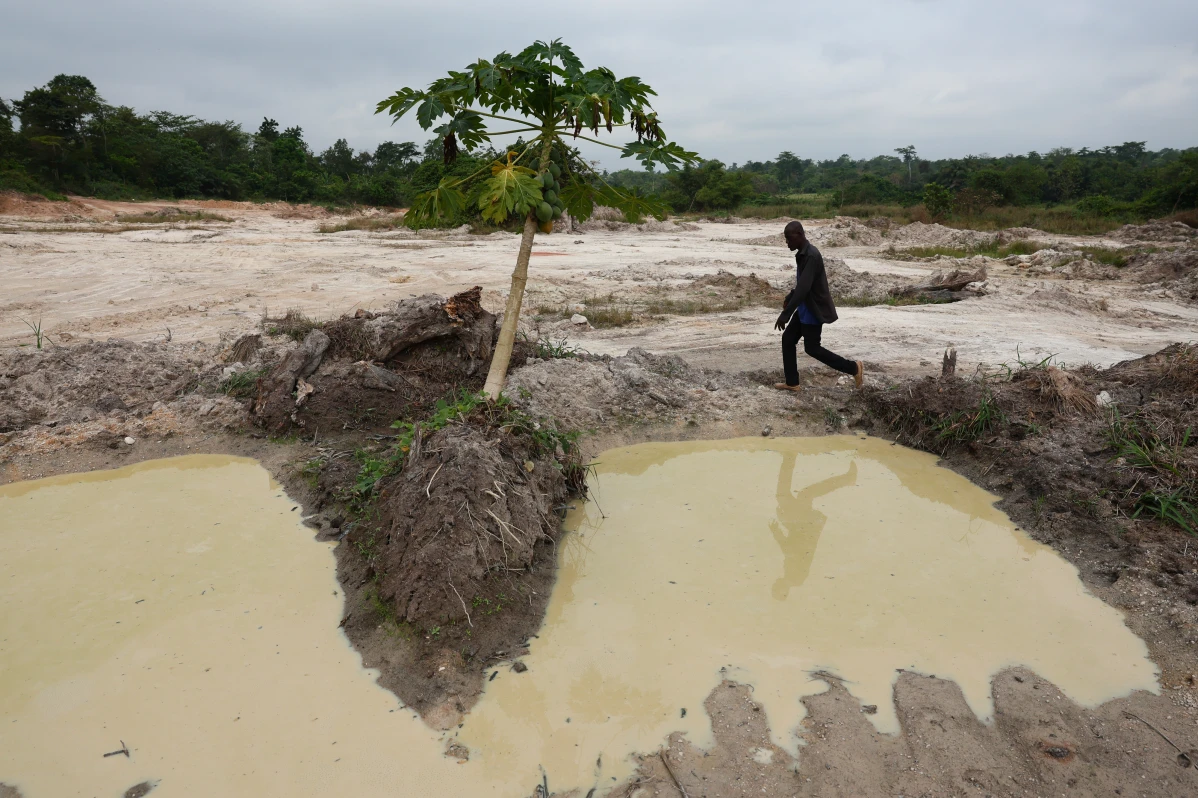
For generations, Manu Yaw Fofie’s family has worked the rich, shaded soil of Ghana’s cocoa belt. But the land he inherited, once a source of prosperity, has become a symbol of his desperation. Beset by a catastrophic fall in global cocoa prices and the devastating effects of climate change, farmers like Fofie are taking the drastic step of destroying their own farms to survive.
Across Ghana and neighboring Ivory Coast—nations that together supply nearly 70% of the world’s cocoa—thousands of farmers are abandoning their cash crop. They are leasing their land to illegal sand and gold miners, a lucrative but environmentally destructive practice that renders the soil permanently infertile.
“The sand mining means I can never go back to farming here,” said the 52-year-old Fofie, watching trucks haul away earth from his family’s legacy. “But if I keep this cocoa farm for the next 10 years, I would die a poor man.”
His annual cocoa yield has collapsed from a peak of 300 bags to just 50 bags in 2025, a decline driven by erratic weather, disease, and aging trees. With his income slashed, he turned to the illegal miners whose sand is in high demand for construction.
A Devastating Price Whiplash
The crisis stems from a brutal correction in the volatile global commodities market. In 2024, cocoa futures soared to an unprecedented high of over $12,000 per metric ton, sparking hopes of a windfall for the region’s millions of smallholder farmers. But the boom was short-lived. As supply eventually outstripped demand, prices crashed to around $4,000 per metric ton.
This whiplash has had a crippling effect on West Africa’s state-regulated systems, which set fixed prices at the start of each season to protect farmers from market swings. When the international price plummeted, global traders refused to buy stockpiled beans at a loss, leaving warehouses full of rotting produce and farmers unpaid for months.
Governments have been forced into emergency interventions. Ghana slashed its fixed price by 28% in January, and this week, Ivory Coast—the world’s top producer—cut its price by more than half to 1,200 CFA francs ($2.13) per kilogram for 2026.
For farmers like Mercy Amponsah, the new price is not a lifeline; it’s a disaster. “Accepting the current price means my son will have to drop out of school,” said the 50-year-old Ghanaian farmer, who joined protests in the capital, Accra, earlier this year.
From Cocoa to Gold
The price crunch has been compounded by the climate crisis. In Ivory Coast, farmer François N’Gbin walks through his plantation pointing at blackened, shriveled cocoa pods—the work of disease and a lack of rain. He has given up a large section of his land to illegal gold miners, who pay him a fee. The area is now a scarred pit of murky, yellow water covering over 1,000 square meters (1,200 square yards).
“Today, gold is more profitable than cocoa,” N’Gbin said, holding a small vial of the ore. He now holds a mining license, fearing arrest for the very activity he invited onto his land. He and his fellow miners are paid 1,500 CFA francs ($2.67) per gram of gold—a steady income cocoa can no longer guarantee.
Moussa Koné, president of the Ivorian cocoa farmers’ union, confirmed that leasing land to illegal miners is becoming commonplace. “Cocoa is not selling, but farmers still need money to feed their families,” he said.
A Race Against Time
Governments are scrambling to stabilize the sector that forms the bedrock of their economies. In Ivory Coast, cocoa beans account for 40% of total export revenue; in Ghana, nearly 15%.
Edward Karaweh, former general secretary of Ghana’s General Agricultural Workers Union, criticized authorities for being caught off guard. “Preparation allows you to mitigate the crisis. It is not that you prevent the crisis altogether,” he said.
While cocoa production is rising in parts of South America and Asia, West Africa remains the world’s dominant supplier. But the human cost of the price crash threatens the region’s long-term output. For every farmer like Fofie who digs up his land, the world loses a potential source of chocolate for decades to come.
Farmers say they are not asking for charity, but for a price that reflects their labor and allows them to survive. Without it, they warn, the region’s cocoa belt will continue to be sold off, one plot at a time.


