



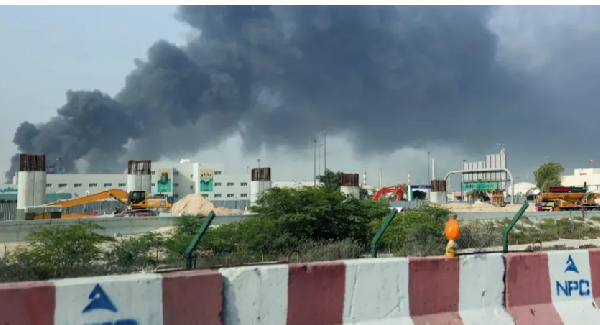
At least one person has been confirmed dead and eleven others injured following security incidents at Dubai International Airport and Abu Dhabi’s Zayed International Airport, as escalating regional tensions linked to Iranian military actions continue to impact civilian infrastructure across the Gulf region.
The most serious incident occurred near Zayed International Airport in Abu Dhabi, where security forces intercepted an incoming drone. While the interception was successful, debris from the destroyed aircraft fell within the airport vicinity, resulting in fatal and non-fatal casualties. A civilian was killed after being struck by falling fragments, while several others sustained injuries. Emergency response teams were immediately deployed to secure the area and provide medical assistance.
At Dubai International Airport, one of the world’s busiest aviation hubs, multiple staff members were injured in a separate but related incident connected to the broader security situation. Authorities have not released full operational details but confirmed the injuries contributed to the overall casualty figures.
Regional Escalation Triggers Widespread Disruption
The incidents form part of a wider regional escalation involving Iranian military operations, which have heightened tensions across the Gulf. The security situation has forced temporary closure of airspace in parts of the Middle East, prompting airlines to cancel, delay, or reroute flights. Thousands of passengers have been affected as major international carriers suspend services to affected regions.
The disruption has significant implications for global travel and logistics. Dubai and Abu Dhabi serve as critical transit hubs connecting Africa, Europe, Asia, and North America. Interruptions to operations at these airports ripple across international aviation networks, forcing airlines to adjust flight paths, absorb operational costs, and manage stranded passengers.
International Concerns Mount
The incidents have renewed international concern about civilian safety in conflict-affected regions. Global leaders and diplomatic bodies have expressed alarm over risks posed to non-combatants and critical infrastructure, calling for restraint and de-escalation to prevent further loss of life. Several governments have issued travel advisories urging citizens to exercise caution when travelling through the Middle East.
Security experts warn that continued escalation could lead to further disruptions in transportation, trade, and tourism, with potential long-term consequences for regional and global economies. Airports, airlines, and government agencies across the region are now operating under heightened alert, strengthening security measures and emergency response protocols.
Authorities Respond
United Arab Emirates authorities have reaffirmed their commitment to public safety and the protection of critical infrastructure. Emergency services remain on standby, and aviation authorities are working to stabilise operations while maintaining strict security controls.
Investigations into both incidents are ongoing.
The tragic death and injuries highlight the far-reaching human cost of geopolitical conflict, demonstrating how military confrontations between states can extend beyond borders to affect civilians, global travel systems, and daily life far removed from the battlefield. The situation underscores urgent calls for diplomatic solutions, regional dialogue, and international cooperation to prevent further escalation and protect innocent lives.


