



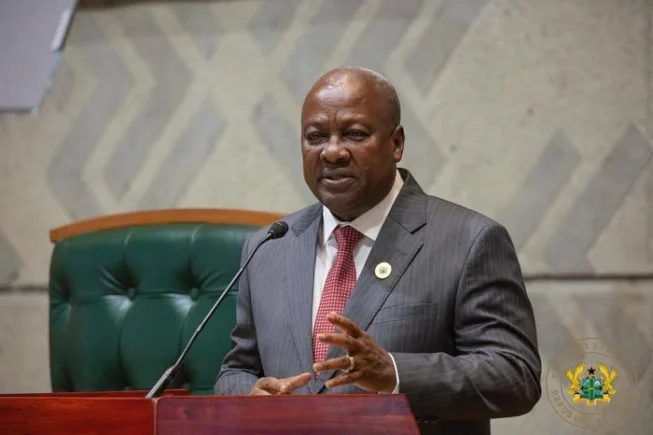
President John Dramani Mahama has called on African countries to allow citizens and civil society organisations to take cases directly to the continent’s human rights court, insisting that governments have nothing to fear from wider access to justice.
Delivering the keynote address at the opening of the 2026 judicial year of the African Court on Human and Peoples’ Rights, President Mahama urged African Union member states that have not yet made the required declaration to do so without delay.
“I humbly ask all African nations and individuals to respect and implement the court’s judgments in good faith and to also make the declaration to allow individuals and non-governmental organisations direct access to this court,” he said.
Speaking on Monday in Arusha, where he appeared as guest of honour for the court’s judicial year opening and the launch of its 20th anniversary celebrations, President Mahama directly addressed concerns among some governments about the implications of broader access.
“To my colleagues, heads of states in these countries, I assure you that you have nothing to fear from this court,” he stated.
The proposal seeks to address a significant gap in Africa’s human rights architecture, where citizens in many countries cannot seek redress at the continental level without first obtaining state approval.
President Mahama emphasised that the court’s effectiveness depends not only on access but also on whether member states comply with its decisions.
“We must empower the Court to be the institution that stands guard over those ideals,” he said, referring to the rights enshrined in the African Charter.
Drawing on personal experience, the Ghanaian leader recalled that his father was detained on several occasions during periods of military rule in Ghana.
“I remain the child whose father was detained for serving his country and advising its leader,” he said, explaining how those experiences shaped his views on justice and due process.
He noted that the effects of injustice extend beyond individuals to families and communities, underlining the need for a strong, independent continental body.
President Mahama also linked his position to broader concerns about weakening protections globally, observing that reliance on external standards for democracy and the rule of law is becoming less dependable.
“For far too long, we compared ourselves to the West and used what we believe were their standards as our benchmarks,” he said, adding that recent developments show those standards are “fast crumbling.”
He argued that Africa must strengthen its own institutions, with the court playing an oversight role across the continent’s 55 member states.
The President acknowledged Ghana’s contribution to the court, citing the service of Justice Sophia Akuffo, a former president of the court, and Justice Dennis Dominic Adjei, who is currently serving a six-year term.
As the institution marks two decades of operation, President Mahama urged African states to deepen their support.
“Now is the time to deepen our commitment to the courts,” he said, expressing hope that the institution will grow into a leading international judicial body in the years ahead.


