



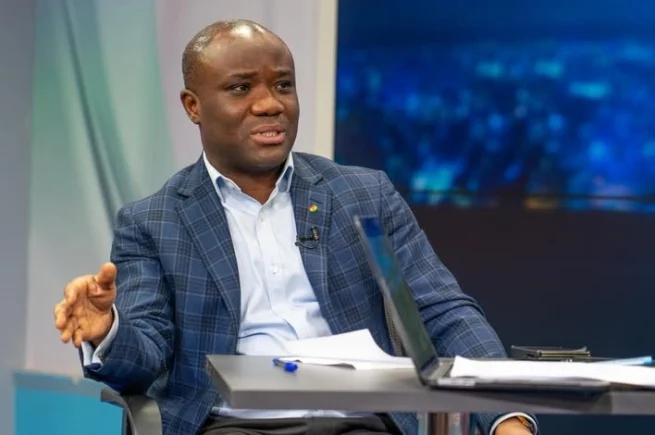
The government spent nearly GH¢2 billion to bridge the gap between the statutory floor price for cocoa and the higher amount it wanted farmers to receive, the Minister of State in charge of Government Communications, Felix Kwakye Ofosu, has disclosed.
Speaking on TV3 on Saturday, Mr Kwakye Ofosu explained that while the National Democratic Congress (NDC) had initially promised farmers 70 per cent of the world market price, the administration went further, raising the share to 90 per cent—a decision that came at a significant cost to the state.
“When we announced a producer price of GH¢3,675, it was 70 per cent of the market price at the time. Now we are giving 90 per cent. We have gone 20 per cent higher,” he said. “To give 90 per cent, the government has had to spend close to GH¢2 billion to make up for the gap.”
He explained that under the standard 70/30 pricing model, the remaining 30 per cent is typically used to cover industry costs, including payments to licensed buying companies, fertilizers, pesticides, and extension services. By increasing the farmers’ share, the government absorbed the financial burden of those operational costs.
Balancing the Books
The revelation comes weeks after the government announced a 28.6 per cent reduction in the cocoa producer price, from GH¢3,625 to GH¢2,587 per 64-kilogram bag on February 12, a move that sparked concern among farmers.
Mr Kwakye Ofosu maintained that despite the cut, the new price remains above the actual cost of production, ensuring farmers are not operating at a loss.
“This price adjustment is not below the cost of producing a bag of cocoa. If farmers were producing at GH¢3,000 and we were paying GH¢2,587, then they would be making losses. That is not the case,” he said.
He further explained that the government faced a difficult choice: borrow heavily to maintain the higher price or adjust it to stimulate market activity.
“The other option was to adjust the price so buyers would return to the market and provide liquidity for licensed buying companies to pay farmers,” he said, adding that early signs indicate the strategy is working. He noted that the Ghana Cocoa Board (Cocobod) has advanced about GH¢3.6 billion to licensed buying companies in recent weeks to purchase cocoa that had remained unsold.
Economist Questions Timing
Contributing to the discussion, economist Professor Godfred Alufar Bokpin acknowledged the government’s intervention but questioned its timing.
“I recognise the effort of government, but it could have acted earlier rather than waiting,” he said.
Prof. Bokpin also pointed to the impact of currency fluctuations on the sector’s challenges. He noted that the Ghana cedi’s sharp appreciation against the US dollar—by over 40 per cent in a single year—had made it difficult to maintain margins given prevailing world prices.
In response, Mr Kwakye Ofosu conceded that the adjustment could have come sooner but defended its necessity. “It is a fair point that it could have been done earlier. But it was necessary, and since the adjustment, we are seeing some results.”
He also cited developments in neighbouring Côte d’Ivoire, the world’s top cocoa producer, where authorities are reportedly considering a similar reduction in farmgate prices to clear warehouse stocks amid low buyer interest.


