



Global energy markets are bracing for significant turmoil after the United States and Israel launched coordinated military strikes on Iran over the weekend, with analysts predicting a sharp spike in oil prices when trading resumes.
Futures trading is set to open Sunday at 6 p.m. ET, and experts warn that the escalation could add as much as $5 or more per barrel to crude prices, threatening to reverse recent gains in the fight against inflation and send gasoline prices climbing.
While the Organization of the Petroleum Exporting Countries (OPEC) and its allies announced a production increase of 206,000 barrels per day on Sunday—a move that could theoretically calm markets—energy analysts believe the adjustment will do little to offset the premium now being baked into prices due to geopolitical risk.
“Brent crude and WTI will roof on the open,” said Bob McNally, president of Rapidan Energy Group. “We should also see refined product margins rise sharply, as well as other gas benchmarks. It will be an ‘all skate’ higher.”
On Friday, before the strikes intensified, the global benchmark Brent crude had already risen 2.9% to settle at $72.87 a barrel in anticipation of conflict.
A Pivotal Player in a Volatile Region
Iran holds the world’s third-largest proven oil reserves and is the sixth-largest producer globally. However, the country’s strategic importance extends far beyond its own output.
The primary concern for markets is the Strait of Hormuz, a narrow waterway off Iran’s southern coast that functions as the world’s most critical oil chokepoint. According to the US Energy Information Administration, approximately 20 million barrels of oil—or about one-fifth of daily global production—pass through the strait daily. Iran controls the northern side of this vital lane.
In previous conflicts, Tehran has threatened to close the strait, a move that would cripple oil exports from neighboring allies like Saudi Arabia, Kuwait, and the UAE. During a 12-day conflict between Iran and Israel last year, Goldman Sachs estimated that an “extended disruption” at Hormuz could send prices soaring past $100 per barrel.
In a statement on Truth Social Saturday, former President Donald Trump indicated that the military campaign would be sustained, posting that “heavy and pinpoint bombing … will continue, uninterrupted throughout the week or as long as necessary.”
Global Ripple Effects
Even if the strait remains open, the loss of Iranian barrels alone would have severe knock-on effects. China and India, which are major importers of Iranian crude, would be forced to compete for alternative supplies on the open market, driving up global prices.
“Since oil is a global, fungible commodity, a disruption anywhere affects prices everywhere,” wrote Clayton Seigle, a senior fellow at the Center for Strategic and International Studies (CSIS), in a recent note. He estimated that merely replacing lost Iranian barrels would likely add a $10 to $12 risk premium to crude prices as China scrambles to bid for substitute supplies.
Impact at the Pump
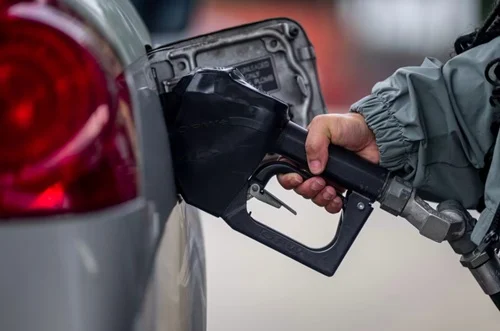
The ripple effects are expected to reach consumers quickly. Gasoline prices, which have been a key economic indicator and political talking point, had recently fallen to an average of $2.98 per gallon, according to the American Automobile Association. That marked the first time prices had dropped below $3 since 2021, a trend the Trump administration has celebrated.
Andy Lipow, president of Lipow Oil Associates, warned that the strikes could unravel that progress. “Oil prices could rise as much as $5 per barrel, if not more,” Lipow told CNN. The last major price spike linked to the region occurred last June when an Israeli attack on Iran caused Brent crude to post its largest single-day gain since March 2022.
As the conflict enters a second day, the duration of the campaign and the integrity of the Strait of Hormuz remain the two biggest variables that will determine how high prices go and how long they stay there.


