



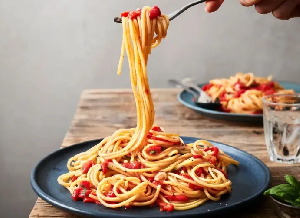
It is a common sight in bustling Accra kitchens and busy Kumasi street food stalls: a plate of spaghetti, not with classic Italian meatballs, but simmered in a rich, spicy tomato stew, often served alongside a hearty serving of waakye. Once a foreign novelty, spaghetti has firmly embedded itself in Ghana’s culinary fabric, becoming a household favourite across the nation.
What began as an imported staple of Italian cuisine has been thoroughly adapted to suit the Ghanaian palate. Today, spaghetti is rarely eaten plain. It is commonly paired with robust, tomato-based sauces infused with local flavours like ginger, garlic, and chilli. Whether mixed with vegetables and proteins like meat or fish, or served as an accompaniment to traditional dishes, its versatility has made it a hit among all age groups.
Experts attribute the noodle’s meteoric rise to a combination of cultural influence and practicality. The proliferation of television cooking shows, social media food influencers, and exposure to global cuisine has made pasta dishes fashionable, particularly among the youth. In urban centres where speed and affordability are paramount, spaghetti offers a quick and convenient meal solution for busy residents.
This convenience is bolstered by widespread availability. Ghana imports significant quantities of pasta to meet the ever-growing demand, ensuring that spaghetti remains an accessible and affordable option for households from all economic backgrounds.
However, Ghanaians have done more than just adopt the ingredient; they have reinvented it. Local cooks have transformed the pasta into a canvas for culinary creativity, seamlessly blending it with traditional cooking methods. The result is a unique fusion that feels both innovative and comfortingly familiar—a true reflection of Ghana’s dynamic food culture.
This trend mirrors a wider pattern across Africa, where imported foods are increasingly integrated into local diets. While the love for spaghetti continues to grow, it has also sparked important conversations about the future of Ghana’s food system. Observers and advocates suggest that boosting local pasta production could reduce the nation’s reliance on imports, create much-needed jobs, and strengthen the agricultural value chain, all while supporting the country’s rich culinary heritage.
Ultimately, Ghana’s embrace of spaghetti is a delicious testament to the country’s ability to absorb global influences and make them its own. From its origins in Italy to its current status as a beloved local staple, spaghetti has secured its place on the Ghanaian table, proving that even the simplest ingredients can bridge cultures and create new traditions.


