



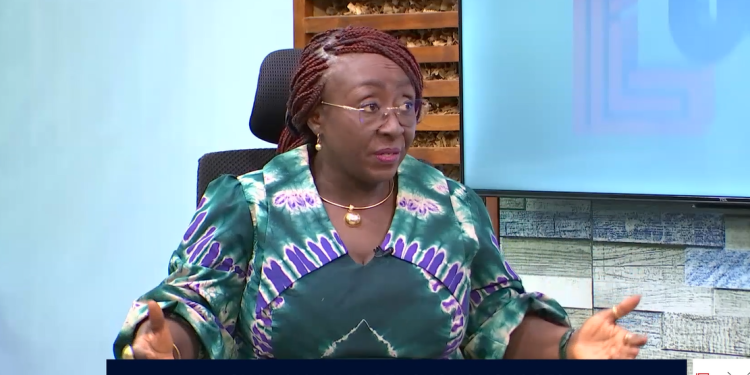
The Minister of Tourism, Culture and Creative Arts, Abla Dzifa Gomashie, has firmly dismissed growing calls for Ghana to adopt a single national language, arguing that such a move would severely undermine the country’s rich and diverse cultural heritage.
In a strong-worded statement, the Minister rejected the notion that languages spoken by smaller populations should be sidelined in favor of a more dominant tongue for the sake of convenience or national unity.
“Promoting a single language in a country as culturally diverse as Ghana is unacceptable,” the Minister stated. “You cannot force people in Ga, in the name of cosmopolitanism, to abandon their tongue for another simply because it is easier or spoken by more people. If a language dies, it takes with it everything within that cultural space.”
Hon. Dzifa Gomashie emphasized that Ghana’s multilingual nature is a strength, not a weakness. She pointed to the African Union’s recognition of cross-border “vehicular” languages as a testament to the importance of linguistic diversity on the continent. The AU has established commissions for languages such as Hausa, Ewe, and Kiswahili, recognizing their role in regional integration without diminishing other local languages.
“The implementation of any policy that seeks to sideline our local languages has been faulty from the start, but we can trace our steps back and correct it,” she added.
The Minister drew attention to the global effort to preserve linguistic diversity, citing UNESCO’s establishment of International Mother Language Day as a crucial reminder of the importance of protecting indigenous tongues. “Your mother tongue is yours,” she stressed. “You can speak seven languages, but why should we reduce it to one just because others are lazy in learning other languages?”
She concluded by urging speakers of dominant languages to be accommodating and create space for minority languages to thrive, ensuring they are passed down to future generations.


