



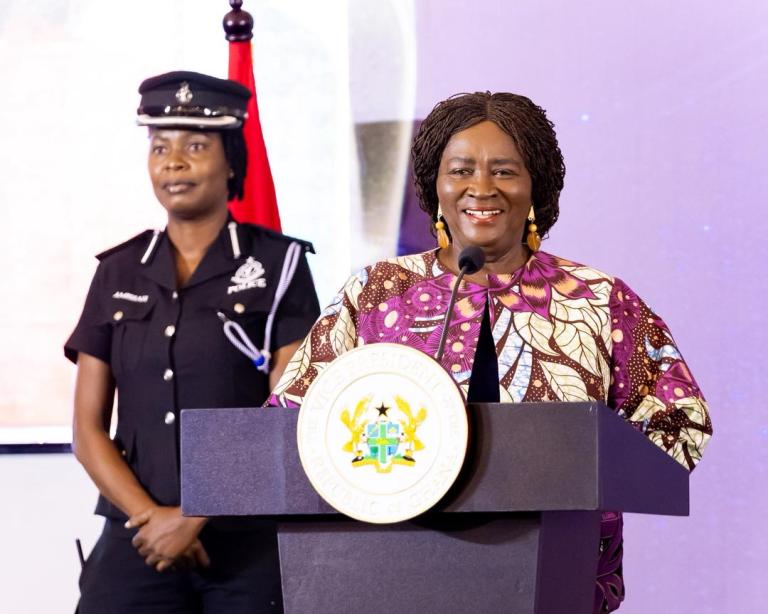
Vice President Professor Jane Naana Opoku-Agyemang has called on women in the public sector to position themselves at the forefront of national transformation, emphasizing that their leadership is critical to shaping policy and driving sustainable development.
Speaking at the Second Annual Conference for Women in Leadership in the Public Sector in Accra, the Vice President outlined the government’s strategy to dismantle the structural and cultural barriers that have historically limited female representation in governance.
“The public sector is where policies are shaped, institutions are strengthened, and national development takes root,” Prof. Opoku-Agyemang stated. She urged women to reject limiting stereotypes and actively claim their space in the decision-making processes that define the nation’s future.
“Act with boldness. Act with clarity. Act with purpose,” she charged the attendees. “Build networks, seek mentorships, share your knowledge, and position yourself as an indispensable contributor to national development.”
To accelerate this shift, Prof. Opoku-Agyemang announced a directive from President John Dramani Mahama mandating a significant increase in female leadership across public service agencies. She disclosed that institutions must achieve a minimum of 30% female representation in leadership positions by the end of this year, with a target of 50% by 2030. This move, she noted, aligns with the provisions of the newly enacted Affirmative Action Act.
Beyond numerical targets, the Vice President argued that promoting women’s leadership is fundamental to good governance. She highlighted the unique strengths women bring to the table, including collaborative decision-making, ethical stewardship, and innovative approaches to complex national challenges.
To create an enabling environment, Prof. Opoku-Agyemang called on public sector institutions to adopt gender-responsive and merit-based recruitment and promotion practices. She also advocated for the implementation of flexible, family-friendly work policies to ensure that women can thrive in leadership roles without being forced to choose between their careers and personal responsibilities.
The conference served as a platform to strategize on how to translate these policy directives into tangible changes within Ghana’s civil service, reinforcing the administration’s commitment to inclusivity as a cornerstone of its “Reset Agenda.”


