



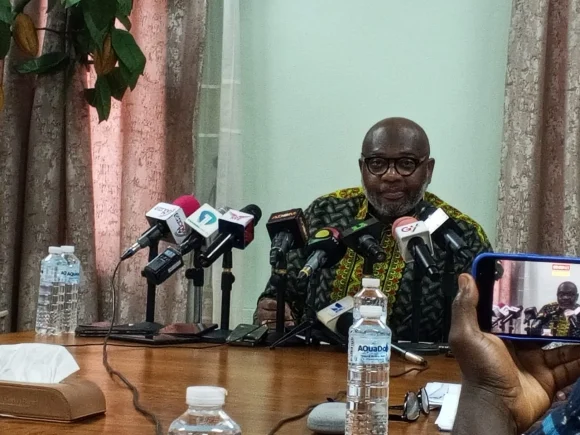
The Chief Executive Officer of the Ghana Cocoa Board (COCOBOD), Mr. Randy Abbey, has confirmed a severe market disruption, revealing that tens of thousands of tonnes of cocoa beans are stranded with farmers due to uncompetitive farmgate prices and a crippling legacy of debt.
Addressing a press conference in Accra on Friday, Mr. Abbey outlined a troubled season characterized by farmer distress and a strained financial model. He disclosed that while COCOBOD has sold over 530,000 tonnes of cocoa this season, approximately 50,000 tonnes remain with farmers, unsold.
“The situation is where we have beans but they are not buying; the beans are too expensive,” he stated, attributing the problem directly to Ghana’s pricing.
He explained that despite high international futures prices, the actual crop price is below $4,000 per tonne. With farmers guaranteed a significant share, making the effective cost to buyers around $5,040, purchasers are turning to cheaper alternatives.
Mr. Abbey assured farmers that COCOBOD is aware of their hardships—including unpaid deliveries—and said a new funding model is being developed for the 2026/27 season.
Legacy Debts and Costly Defaults
Reflecting on his first year in office, the CEO detailed a staggering inherited debt burden. COCOBOD’s total debt stands at GH¢32.91 billion, including a $481 million loan due this season for which no repayment funds were set aside.
He also revealed a costly default on forward sales contracts from the 2023/24 season. The Board had agreed to sell 333,760 tonnes at $2,600 per tonne but failed to deliver. With prices now significantly higher, Mr. Abbey estimated this failure cost the nation nearly $1 billion in lost potential revenue.
A separate $350 million loan for farm rehabilitation, he said, yielded only 40,000 completed hectares out of a targeted 156,400, even as the debt continues to be serviced.
On Cocoa Roads and Vehicle Procurement
Regarding cocoa road projects, Mr. Abbey noted commitments had been scaled down from GH¢26 billion to GH¢4.35 billion, but a rationalisation exercise is stalled due to a missing GH¢50 million consultancy fee for assessments.
He also addressed social media allegations of excessive vehicle spending, confirming the procurement of 20 vehicles so far, including allocations to the Bunsu Cocoa College and National Best Farmers. He stated the purchase was a planned response to an aged fleet, with 70.3% of vehicles being overaged, and was funded internally from the sale of cocoa sample residues.
Call for Structural Reform
Mr. Abbey concluded by emphasizing the need for a new COCOBOD Act, noting a lack of laws protecting cocoa trees. He described the sector’s challenges as deep-seated and structural, urging patience as management works to rebuild on a sustainable footing.


