



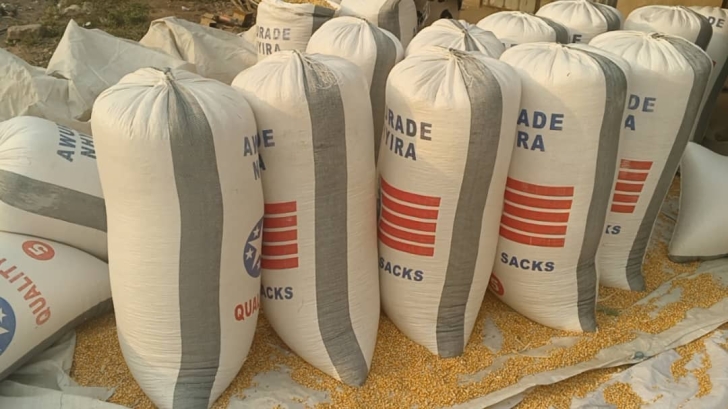
A bumper harvest has turned into a bitter ordeal for farmers in the Atebubu-Amantin Municipality, as a dramatic collapse in the prices of maize and beans threatens their livelihoods and the local economy.
A Daily Graphic survey in Akokoa and surrounding farming communities reveals that staple crop prices have fallen by more than half compared to the previous year. A bag of beans, which sold for GH₵2,500 to GH₵3,000 in 2024, now fetches a meager GH₵700 to GH₵1,000. Similarly, maize prices have crashed from GH₵1,000-1,200 per bag to just GH₵300-400.
“We are forced to sell at a loss or keep our produce at home,” lamented farmer Ebenezer Wayome of Akokoa. “Even last year’s prices, which were not good, were better than this.”
The price crash is exacerbated by persistently high production costs. Farmers report spending approximately GH₵1,200 for a box of agrochemicals, GH₵350-500 per bag of fertilizer, and GH₵350-400 per acre for tractor services. With income slashed, many are unable to recoup their investments, particularly those who financed operations through loans or personal savings.
The economic distress is rippling through the community. Produce buyers have scaled back operations due to financiers’ fears of losses, leading to a market slowdown. This has idled transport operators, casual laborers, and loading boys who depend on the grain trade.
“The low prices have hit us hard. Many young people are turning to crime or facing police harassment out of frustration,” stated one unemployed loading boy, appealing for government intervention.
Local financial institutions are also feeling the strain. Officials from rural banks report declining savings and slowing loan repayments from farmers, weakening their capacity to extend future credit for agriculture and small businesses.
In response to the crisis, many farmers are planning to drastically reduce their cultivated land. Farmer Baye-Uchan, for instance, intends to cut his acreage from 50 to 20 this coming season.
Farmers and community leaders are now urgently calling for government intervention. They propose measures such as improved storage facilities, expanded market access, and structured buying programs to stabilize prices and absorb surplus harvests. They warn that without swift action, reduced farm investment could undermine future food security in the region


