



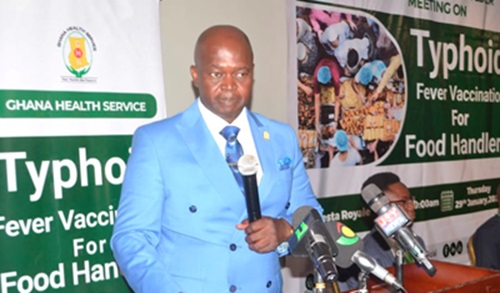
The Ghana Health Service (GHS) is set to launch a nationwide mandatory typhoid vaccination program targeting all food handlers in a decisive move to curb the spread of the disease.
The initiative, which will roll out in phases in the coming weeks, will cover workers across the food and beverage sector—from street food vendors and market operators to restaurant, hotel, and food manufacturing staff.
Director-General of the GHS, Dr. Samuel Kaba Akoriyea, announced the plan last Thursday during a stakeholder meeting in Accra attended by representatives from the Food and Drugs Authority, the Ghana Tourism Authority, metropolitan, municipal and district assemblies, development partners, and the hospitality industry.
Under the new policy, food handlers will be required to receive the typhoid vaccine, which offers protection for three years, as a condition for obtaining the health certificate needed to operate. The program is designed to close existing prevention gaps and complement current medical screening protocols.
“Food handlers occupy a critical position within this public health landscape. By the nature of their work, they are exposed to contamination and, if infected, can inadvertently contribute to the transmission of typhoid fever,” Dr. Akoriyea stated.
He explained that the rollout will begin with structured establishments such as hotels, restaurants, and food companies before extending to market vendors and other informal food handlers. The vaccine cost has been subsidized and will be disclosed officially at the program’s launch.
“The vaccines to be administered are World Health Organization-qualified and approved by the Food and Drugs Authority, meeting the highest standards of safety, quality, and efficacy,” Dr. Akoriyea assured.
He emphasized that the success of the initiative relies on stakeholder collaboration, public trust, and effective communication. The vaccination drive will be paired with public education and media campaigns to ensure broad awareness and compliance.
The program aligns with Ghana’s national health agenda, universal health coverage objectives, and the Sustainable Development Goals, reinforcing the country’s commitment to proactive and preventive public health measures.


