


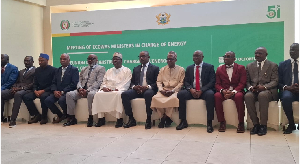
Energy ministers of the Economic Community of West African States (ECOWAS) have adopted two key regional instruments on battery energy storage and electricity market financing, in a decisive push to harmonise energy operations, accelerate renewable integration and strengthen the regional electricity market.
The decisions were taken at the 16th Meeting of ECOWAS Ministers Responsible for Energy, held in Accra on Thursday, October 22, 2026, and chaired by Senegal’s Minister of Energy and Petroleum, El Hadji Abdourahmane Diouf .
Two Instruments, One Goal
The first instrument is a directive on the deployment of Battery Energy Storage Systems (BESS) and related technologies, proposed by the ECOWAS Centre for Renewable Energy and Energy Efficiency (ECREEE). It is designed to facilitate the integration of solar and other variable renewable energy sources into national grids by smoothing output volatility and storing excess power for peak demand periods .
The second is an amendment to the regulation governing the ECOWAS Regional Electricity Market Levy, proposed by the ECOWAS Regional Electricity Regulatory Authority (ERERA). The amendment aims to provide adequate resources for regional institutions—including ERERA, the West African Power Pool (WAPP) and the System Market Operator—to carry out their regulatory and operational responsibilities .
A Region Operating in Silos
ECOWAS Commissioner for Infrastructure, Energy and Digitalisation, Amin Amidu Sulemani, stressed that fragmented national approaches would not deliver energy security for the sub-region.
“If we operate independently, it will be difficult in the energy sector. We must operate as a region and as an integrated body,” he said .
Sulemani noted that inadequate financing continues to undermine efforts to expand generation, improve access and accelerate renewable development, and called for stronger, independent regional energy institutions capable of attracting private investment .
Ghana’s Peak Demand Challenge
Ghana’s Minister of Energy and Green Transition, Dr. John Abdulai Jinapor, told the meeting that the country was pursuing battery storage solutions to manage a peak-to-off-peak demand gap that can reach 800 megawatts during certain seasons .
He disclosed that Ghana had completed competitive bidding for about 200 megawatts of solar power and planned to procure an additional 200 megawatts to help meet peak demand.
“The future of energy security is not just simply about the power we generate. It is about how intelligently and efficiently we manage the power available to us,” Dr. Jinapor said .
He also called for stronger regional trade in natural gas to reduce dependence on external suppliers and limit exposure to international disruptions.
180 Million Still in the Dark
The urgency of the region’s energy challenge was underscored by stark data from the ECOWAS Commission: only 61 per cent of the region’s population has access to electricity, leaving nearly 180 million people without service .
Stakeholders noted that although the sub-region has abundant solar resources, deployment remains far below the level required to meet its needs. The commission urged member states to increase investment in solar and other renewable sources.
Experts Laid the Groundwork
The ministerial adoption followed a two-day meeting of energy experts from ECOWAS member states, the ECOWAS Commission, its institutions and the West African Economic and Monetary Union (WAEMU), held in Accra on October 20 and 21. The experts reviewed the draft instruments and submitted recommendations for ministerial consideration .
Arkadius Koumoin, Director of Energy and Mines at the ECOWAS Commission, said the experts’ recommendations would provide a solid foundation for advancing storage technologies, strengthening the market’s financial sustainability and ultimately improving access to reliable and affordable electricity for West Africans .
The ministers also reviewed progress on the regional electricity market, priority interconnection projects and the state of WAPP’s operations .