



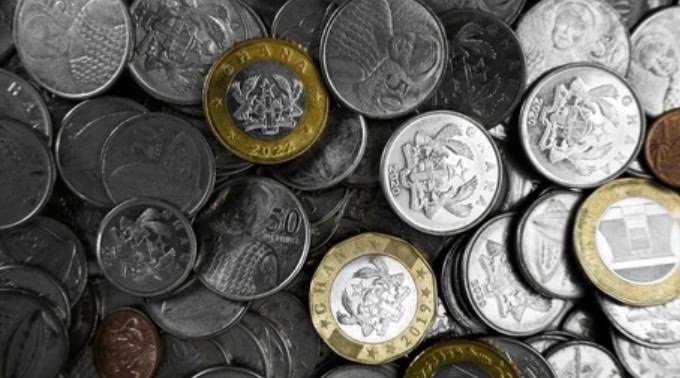
The Ghana Road Transport Coordinated Council (GRTCC) has blamed a shortage of coins in circulation for the rounding up of some commercial transport fares, following the implementation of an approved 8% increase that took effect on Saturday, September 26, 2026.
Speaking on Joy FM’s Midday News on Monday, September 28, GRTCC General Secretary Emmanuel Ohene Yeboah said the lack of coins makes it difficult for drivers and passengers to pay exact fares, forcing operators to round amounts to the nearest practical figure.
“Yes, we are having that because of the use of coins. You know, we don’t have a lot of coins in the system, so making the exact change becomes a bit of a challenge. So, all we do is look at the ledger and, where coins are required, we have to round it to the average,” he said. “That is the issue we are having. But quite frankly, I’m not saying anybody will want to do anything different from what is directed.”
His comments follow complaints from passengers that some drivers are charging more than the approved 8% increase. For instance, passengers travelling on a route where the previous fare was GH¢50 have reported paying GH¢55 instead of GH¢54, which would result from an exact 8% increase. While the difference may seem small, it adds up for commuters who make multiple trips daily.
Mr. Yeboah said the Council is aware of the concerns and has deployed officers to monitor fares at transport terminals across the country.
“We have our officers on the ground. Almost all the terminals have their officers. Whatever happens at the terminal, we are able to know exactly where it’s happening,” he stated.
He explained that the Council has provided transport operators with a fare template showing old and new fares to guide implementation of the adjustment. The monitoring system, he added, will help identify and address cases where operators charge beyond the approved rates.
Background to the 8% Increase
The 8% fare adjustment took effect last Saturday following engagements between transport operators and the Ministry of Transport. The increase followed a period of uncertainty in the transport sector. In July 2026, the Ghana Private Road Transport Union (GPRTU) proposed a fare hike of between 25% and 30% due to rising fuel prices. However, plans for a larger increase were put on hold after talks between the government and transport operators.
A joint technical team comprising representatives from the Ministry of Transport, the GPRTU and the GRTCC evaluated various operational cost components and ultimately settled on an 8% increase. Transport operators have attributed the adjustment to rising fuel prices, spare parts and other operational costs.
The fuel price situation has been a major concern. The Chamber of Oil Marketing Companies (COMAC) projected that petrol prices would rise by 9.63% and diesel by 6.97% in the second pricing window of September 2026, with petrol potentially selling at about GH¢17.23 per litre and diesel reaching GH¢18.35 per litre. The government had also extended a GH¢2 per litre diesel price relief into September to cushion operators.
Coin Shortage a Persistent Problem
The coin shortage is not a new challenge. The Bank of Ghana has repeatedly cautioned traders and the public over the refusal to accept lower-denomination coins, stating that the practice could distort pricing and contribute to inflation. Under the Currency Act, 1964 (Act 242), no individual or business is permitted to reject officially issued currency.
In April 2026, the Bank of Ghana noted that consistent price rounding resulting from the refusal of coins can contribute to inflation and reduce the efficiency of everyday transactions. The central bank has since intensified public education campaigns and is working with financial institutions to improve the distribution and recirculation of coins.
The Convention People’s Party (CPP) also weighed in on the matter in June 2026, calling on the Bank of Ghana not to phase out pesewa coins but rather to strengthen measures to enforce their acceptance. The party warned that the informal rejection of pesewa coins had become widespread in markets and on commercial transport routes, resulting in arbitrary rounding up of prices and fares.
History of Fare Adjustments
This latest increase follows a series of fare adjustments in Ghana’s transport sector. In August 2025, public transport fares were increased by 20%, a decision announced by the GRTCC. However, that adjustment was marred by confusion, as the GPRTU distanced itself from the announcement. Prior to that, transport operators had not increased fares since 2024, despite significant rises in operational costs.
As the new fares take effect, the GRTCC has urged passengers to report any instances of overcharging to its officers stationed at transport terminals. The Council maintains that the approved rates, as outlined in the fare template, remain the official guide for all commercial transport operators.


